The Best Places to Visit in Tunisia
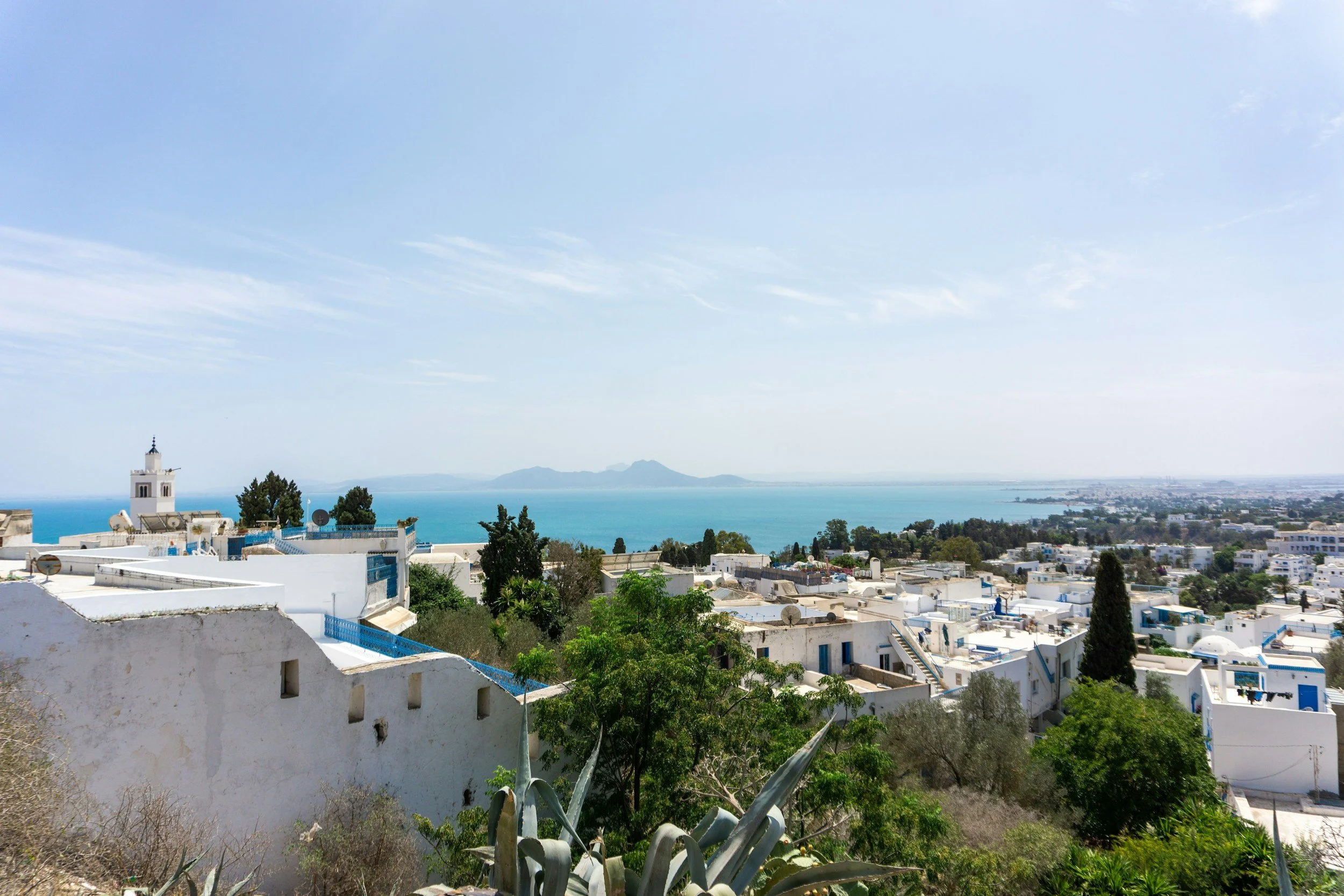
All the way up in northern Africa is the Mediterranean style, desert covered country of Tunisia. Home to 12 million people, daily life blends Arab, Amazigh, Mediterranean, and European influences. You see this everywhere, from the architecture of old medinas to the food, language, and rhythms of street life. Tunisia has been such an important country historically, and you can see this for yourself when you visit some of the most ancient ruins and landmarks scattered all through its land. It’s a very layered country, welcoming for the most part, and definitely still off the beaten path for at least a few years.
Capital: Tunis
Currency: Tunisian Dinar
Language: Arabic, French
When to visit: April to June, October to November
1) Tunis
Tunisia’s bustling capital city sits all the way in the country’s north right near the Mediterranean Sea, with Lake Tunis separating parts of the city from the shoreline. It’s a classic city in the Arab world, complete with chaotic souks and shopping areas, locally run cafes and bars, and of course streets with mosques at every end. It’s the political, cultural, and economic heart of the country, and home to roughly 2.5 million people in the wider metropolitan area.
Things to do:
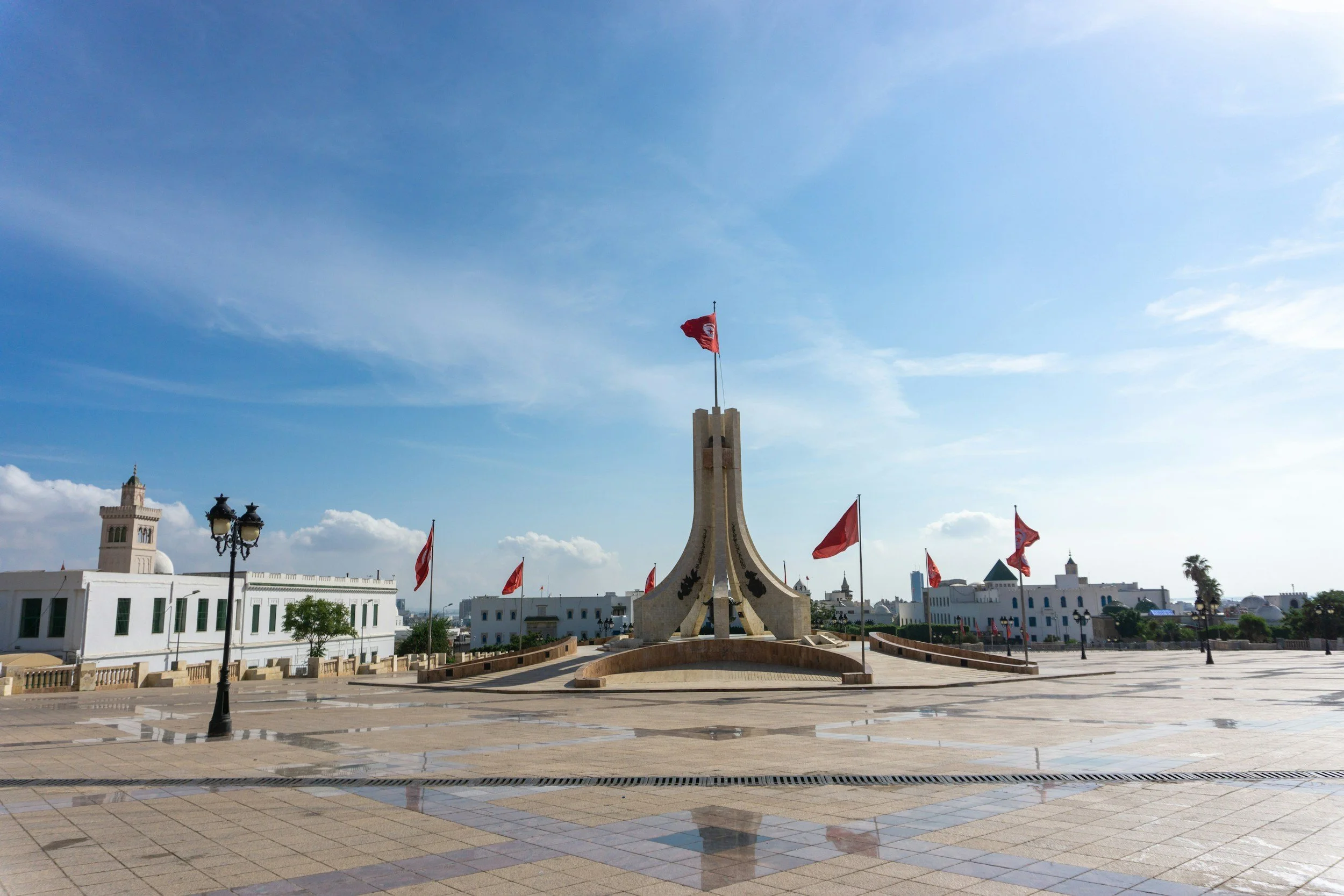
Tunisia’s core is the Medina of Tunis, a maze of narrow streets filled with mosques, souks, old palaces, and workshops. Walking through a Medina is always a full on experience as you literally have the every day life of locals (and tourists) unfolding right in front of you. Zitouna Mosque sits in the heart, and it is one of the most important religious buildings in Tunisia full stop. A couple streets down from that is also Kasbah Square, a massive square with a very iconic and prominent structure in the middle, as you can see in the picture. You may find the massive main street which acts as the heart for all things important in Tunis, and that is Avenue Habib Bourguiba. Cafes, shops, literally everything line the street with palm covered walkways in the middle. And lastly if you want to understand more about Tunisia as opposed to just experiencing it, go to Bardo Museum, which is famous for its Roman mosaics, many of which are among the best preserved in the world.
How to get there:
Tunis–Carthage International Airport (TUN) has direct flights from many cities across Europe, North Africa, and the Middle East.
Trains also connect the capital with cities such as Sousse, Sfax, Bizerte, and Gabès. Otherwise bus is always an option.
2) Carthage
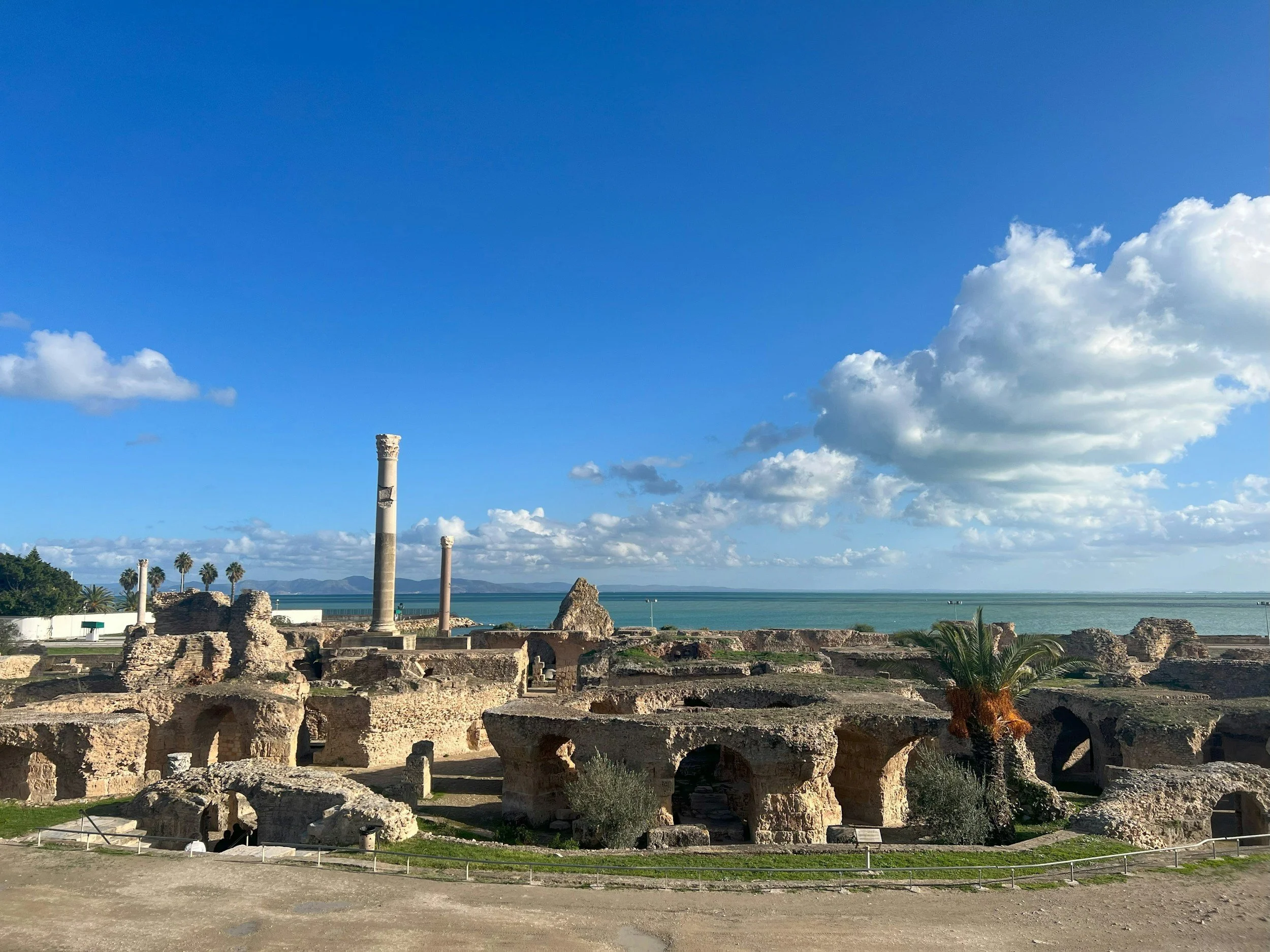
Carthage is one of the most historically significant places in North Africa, sitting along the Mediterranean coast literally right outside Tunis. What makes Carthage so special is the enormous power it once held in the ancient world. It used to be a major maritime empire that controlled trade routes across the Mediterranean, whereas nowadays it just sits peacefully along the coast and is merely ruins.
Things to do:
The Archaeological Site of Carthage is pretty big in scale, but the main sites include; The Baths of Antoninus, Byrsa Hill, the Odeon Roman Theatre, and the Punic Ports. There is so much more to see in terms of ruins, so I’d just recommend looking at google maps or even going to Carthage National Museum on the hill to explore more. And scattered across Carthage everywhere are the remains of Roman homes and streets, so just spend a good bit of time walking around. It’s right by the sea as well, with charming coastal cities like Sidi Bou Said nearby.
How to get there:
The TGM suburban train lines have several stops in Carthage.
3) El Djem
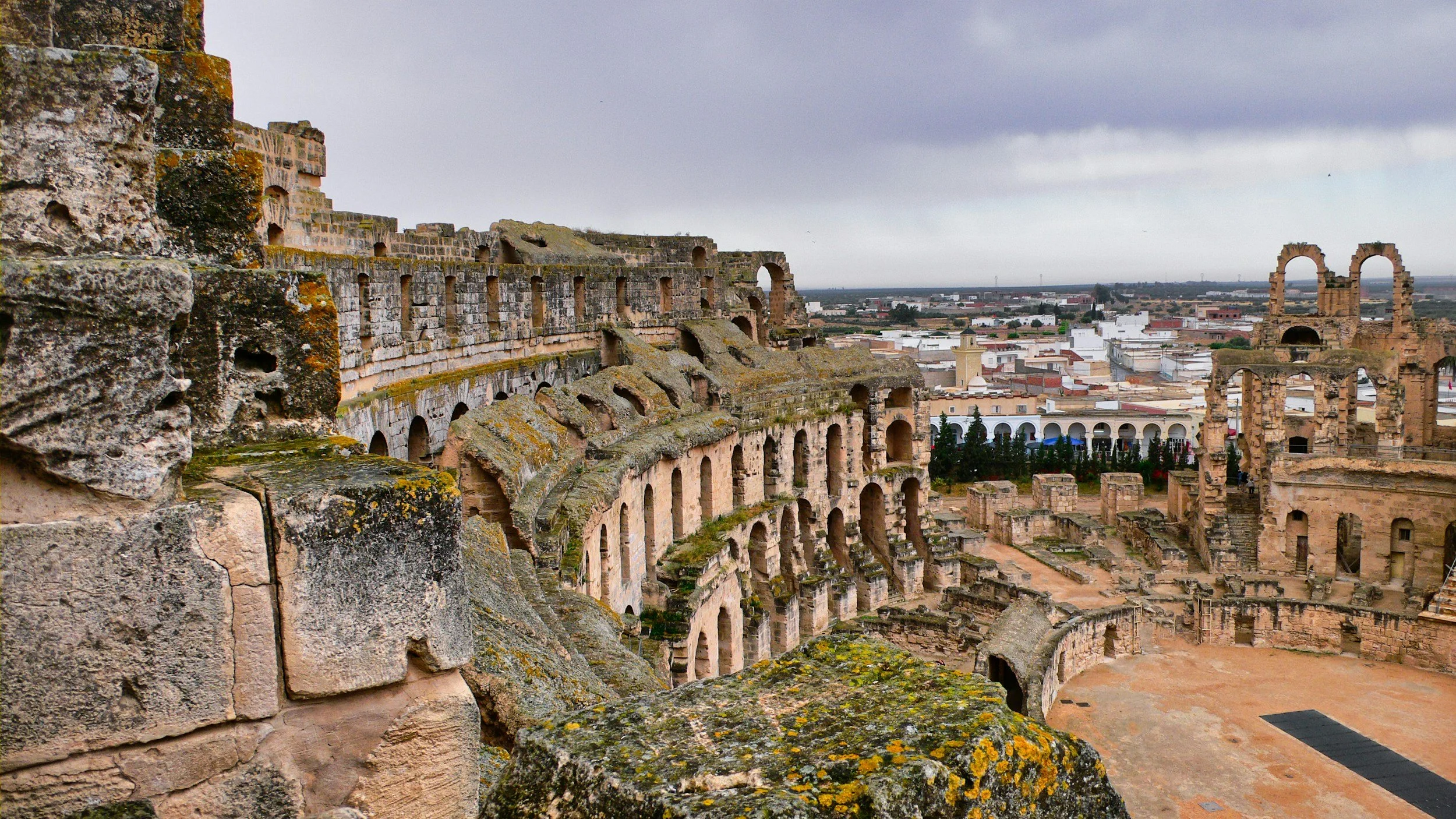
El Djem is a small town in central Tunisia that happens to be home to one of the most extraordinary Roman monuments in the world. The Amphitheatre of El Djem dominates everything. Built in the 3rd century AD, it is one of the largest Roman amphitheaters ever constructed, rivaled only by the Colosseum in Rome. It’s the reason everyone stops here.
Things to do:
Like I just said, the Colosseum of El Djem is the most significant and insane thing in the whole town. You can walk freely through the arena floor, climb into the seating tiers, and explore the underground tunnels where gladiators and animals were once held. It’s Africa’s largest Colosseum overall. Besides this, there isn’t a lot else to see. You can perhaps stop in at the El Djem Archaeological Museum for a little more context and to see some Roman artifacts if you like.
How to get there:
El Djem is also on Tunisia’s train line, so you can train from Tunis or any of the cities in between.
4) Tataouine
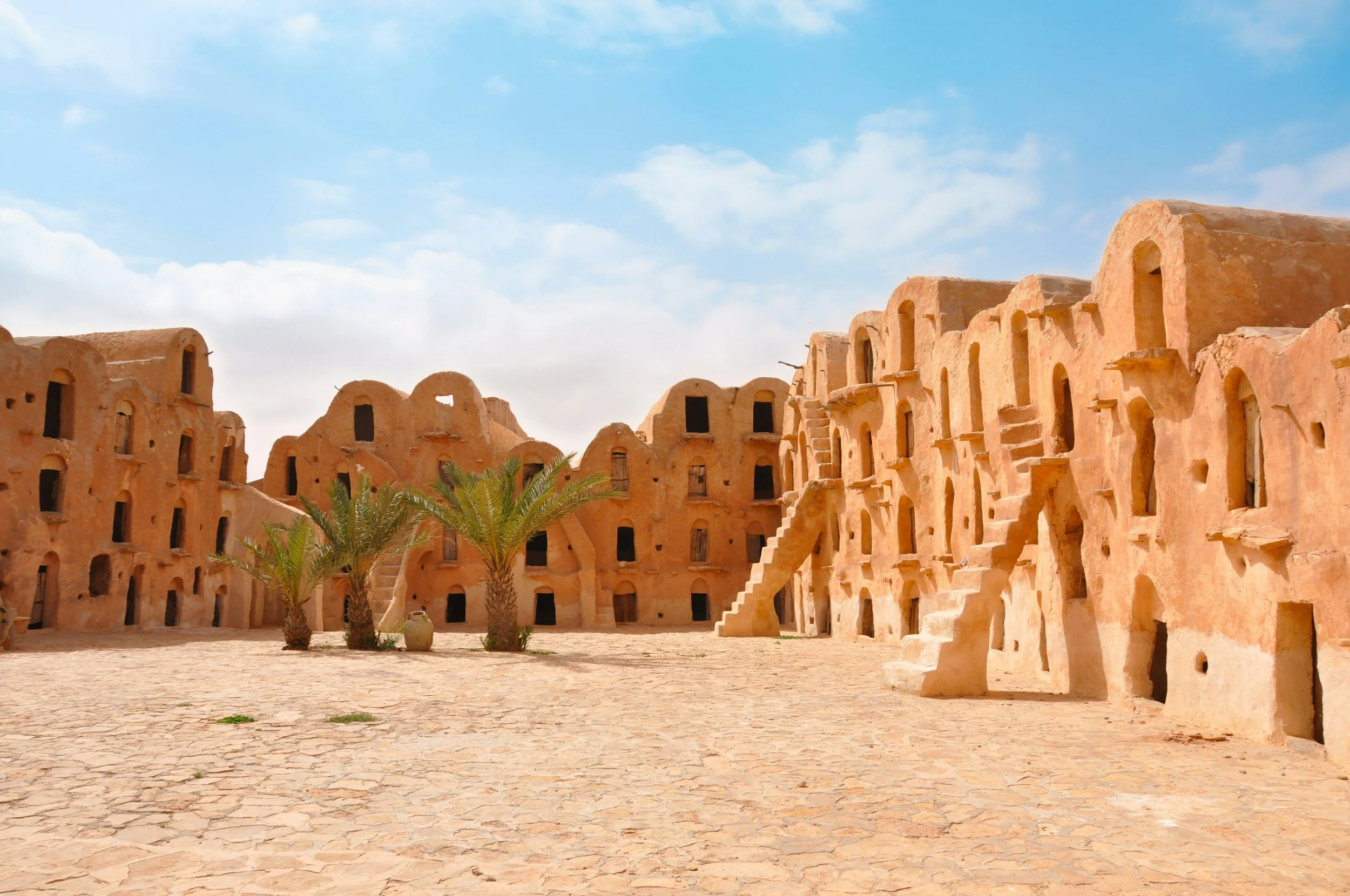
This location here is mainly for Star Wars fans, as the desert city of Tataouine serves as the inspiration for the planet of Tatooine in the movies. While the main filming locations were all around Tunisia, Tataouine is awesome to see as the native Berber population live in these traditional cave houses made from stone. Plus, Tataouine used to be a part of historic north African trade routes.
Things to do:
Since the main thing to do is kind of just explore, go to Tataouine town center which gives you insight into local life. You can find local markets, traditional cafes, and all sorts. The Star Wars House is an attraction on the outskirts of the city too. In terms of Star Wars filming locations in and around Tataouine, we have the village of Ksar Hadada, which is just north of Tataouine and was a primary filming location for The Phantom Menace. So was Ksar Ommarsia and Hotel Sidi Idriss in Matmata. Overall the whole desert area is very cool to see, and Tataouine is a good stop on a road trip.
How to get there:
Without a car is tough, but you can find long distance bus options from major cities.
5) Dougga
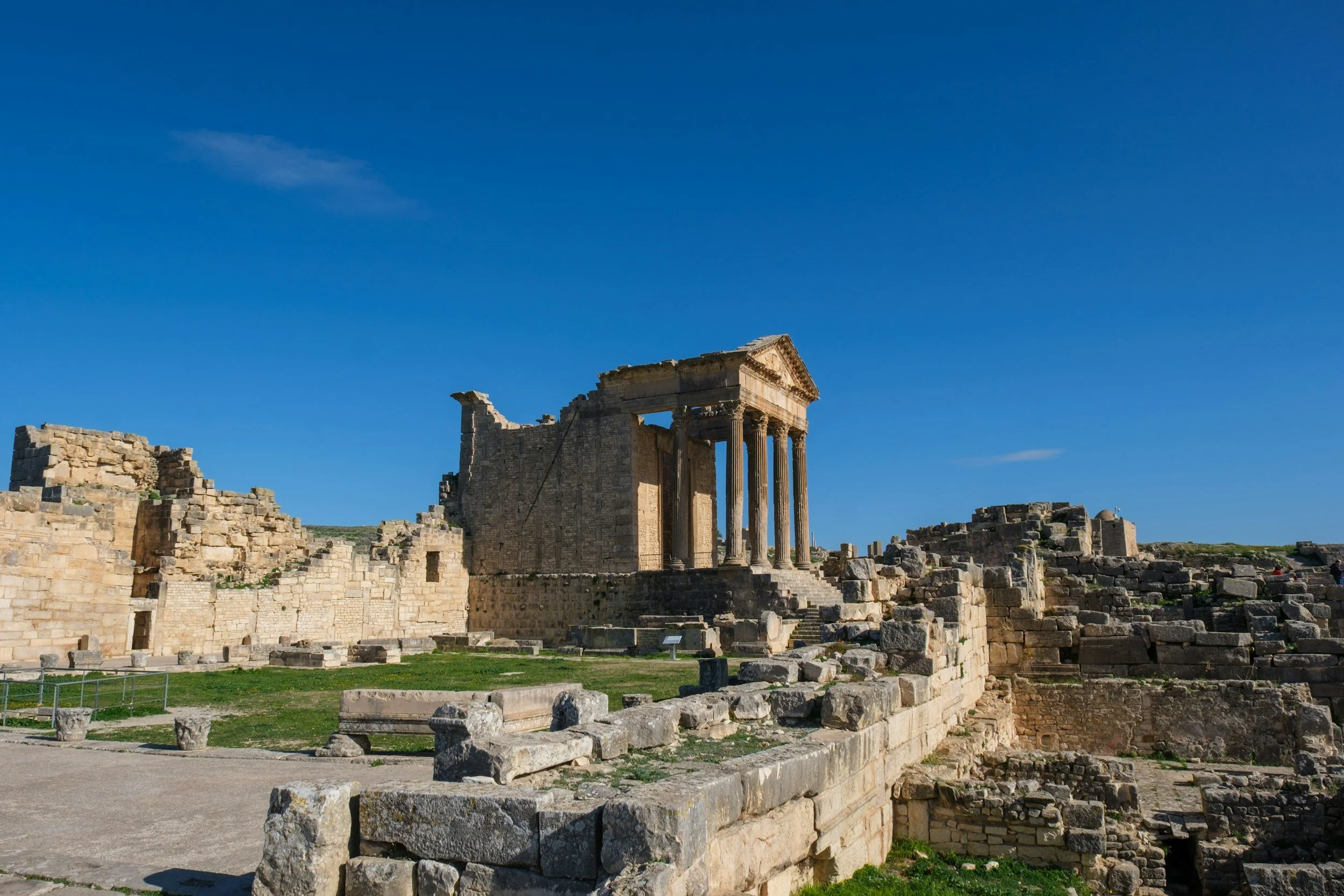
Dougga is an insanely well preserved ancient city found in Tunisia’s north up on a hilltop. Dougga began as a Numidian city before being taken over by the Romans, and what makes it special is how clearly you can see layers of history stacked together. Roman temples, theatres, baths, streets, and houses are still standing in remarkable condition, but you also find older Punic and Numidian elements woven into the city.
Things to do:
The absolute highlight is the Dougga Capitol Temple in the archeological site. It sits right on the edge of the hilltop and is incredibly well preserved. It dedicated to Jupiter, Juno, and Minerva. I genuinely can’t list everything in the Dougga Archeoligcal Site because there is so much packed into one place, so just walk through yourself. What you will see is the ruins of Baths, Temples, Tombs, Houses and Mausoleums. The streets are so ancient, so wander them all, plus it tends to be quieter than Carthage as it’s a bit of a journey from Tunis.
How to get there:
Use a louage (shared minibus) from Tunis to Testour which is the closest city, and then you’ll need a taxi to complete the trip.
Support the Site
If these guides have helped your travels, consider buying me a coffee ~ it helps keeps the content free!
buymeacoffee.com/roamingideas