The Best Places to Visit in Romania
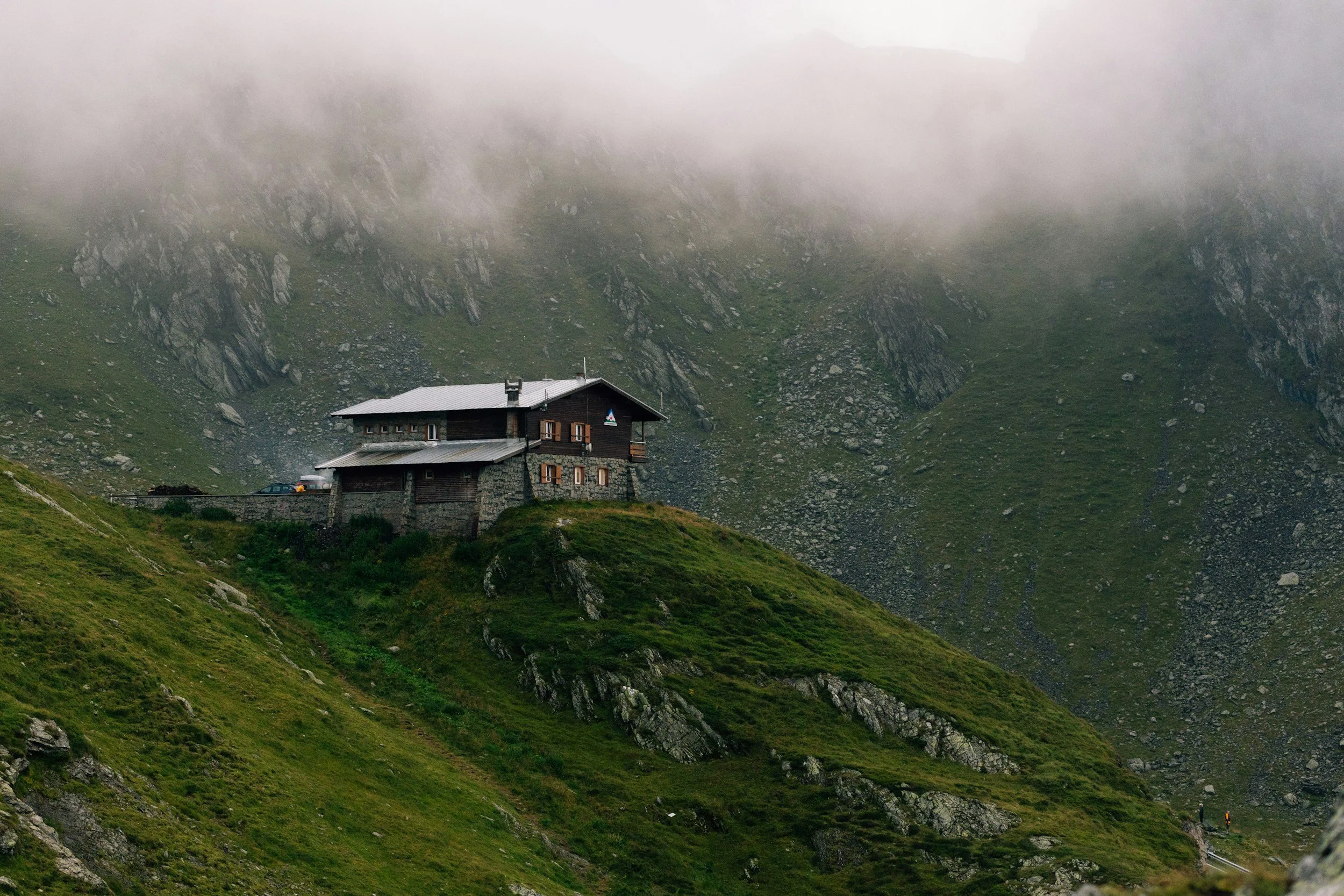
Romania is an incredibly underrated and immensely beautiful Eastern European country with a population of over 19 million people. It’s filled with so many medieval cities and towns, and often associated with Dracula. Plus, Romania’s nature is incredible; Bear-filled mountains run through the heart of the country and you can find deep forests and valleys in between the long agricultural plain areas. Most people in Romania visit for the historic buildings, as you can find some truly breathtaking old castles outside some of the cities in the country’s center. It’s an atomspheric country great for exploring - plus it’s very cheap.
Capital: Bucharest
Currency: Romanian Leu
Language: Romanian
When to visit: May to October
1) Brașov
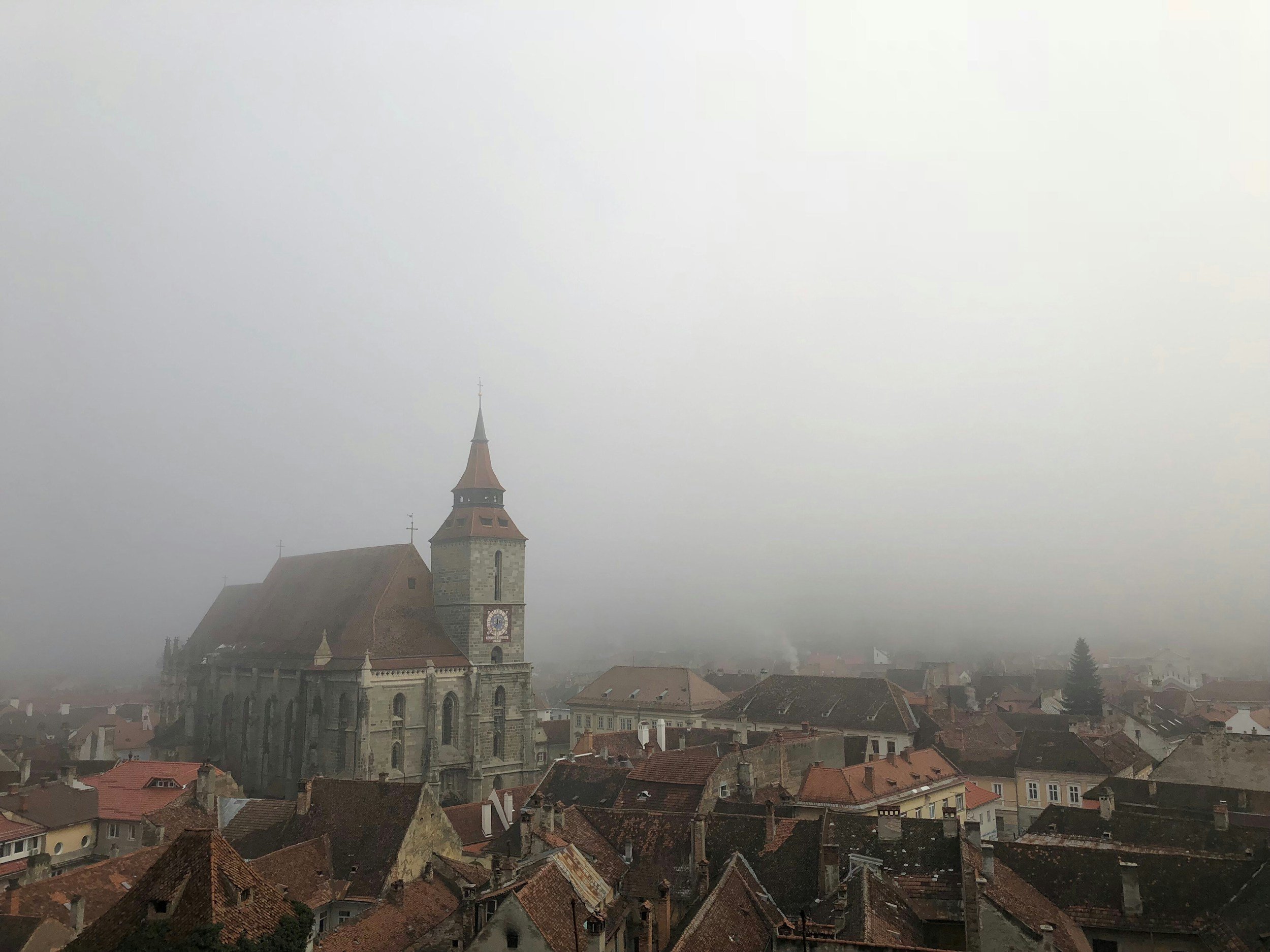
In the heart of Transylvania and wrapped by the Carpathian Mountains is Brasov, one of Romania’s storybook cities with a medieval setting. It’s probably the most popular in the area, as the streets are so beautiful and the architecture is historic and colorful at the same time. It’s also in a very close proximity with other Transylvanian cities, so I’d 100% recommend it as your starting point.
Things to do:
Brasov’s old medieval center area is Council Square, which is a massive market area where you can stand in and be surrounded by a bunch of old buildings containing shops and bars. You’ll be able to see the Black Church and the The Council's House. Explore the rest of Brasov Old Town and visit towers like the White Tower and Black Tower for insight into how the city was defended. The two gates of Catherine’s Gate and Șchei Gate mark entry into the city, and overall there is so much classical buildings you could walk around for a long time. I would also hike up to Tâmpa Peak, which is sits on top of Mount Tâmpa right behind Brasov and gives you the greatest views of the city below.
How to get there:
Brașov-Ghimbav International Airport (GHV) has decent regional connections and is a great gateway to Transylvania.
There are frequent direct trains and buses from Bucharest, Cluj-Napoca, Sibiu, and other major Romanian cities.
2) Bran
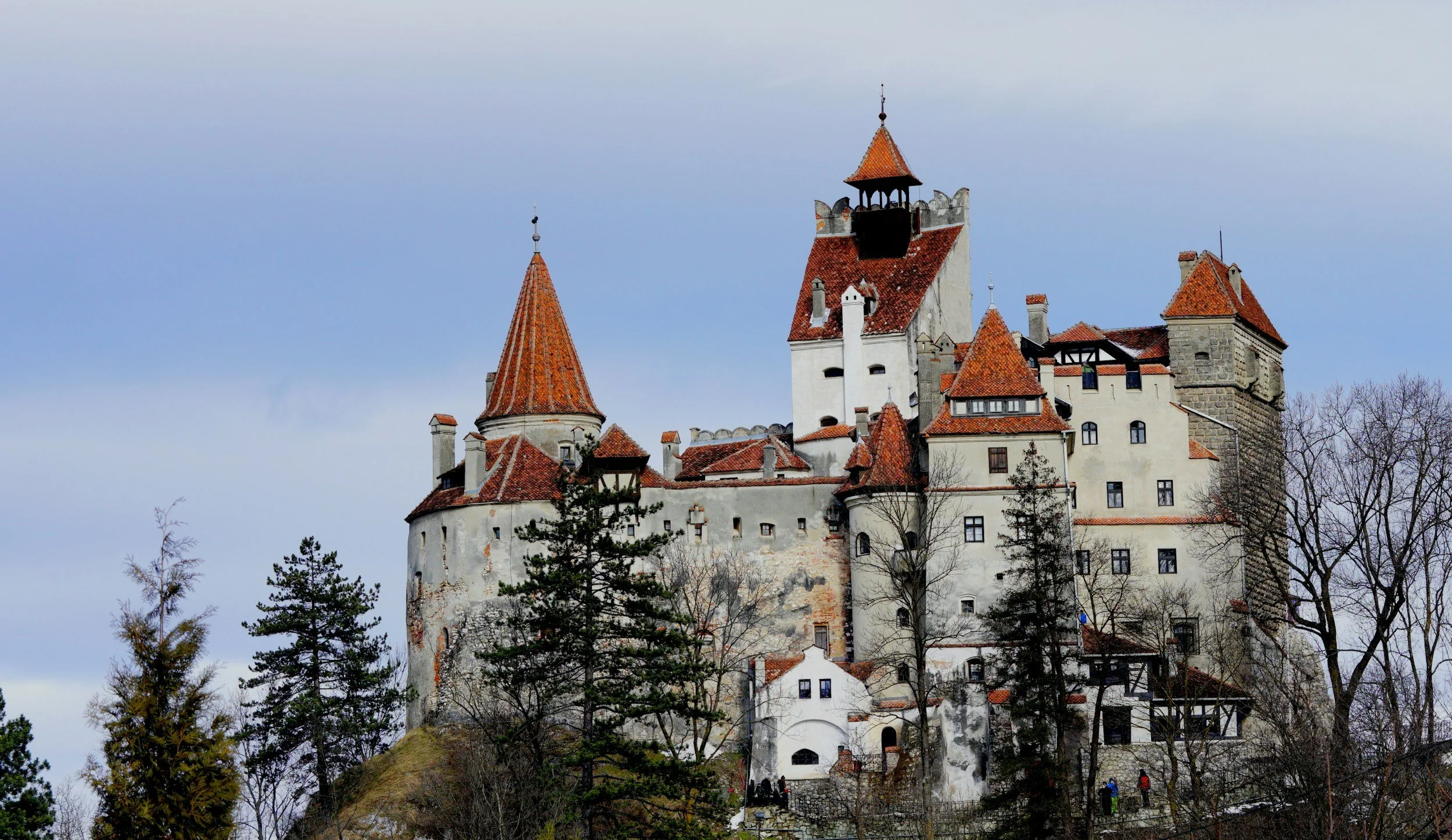
Bran is a small mountain village in central Romania, tucked right against the edge of the Southern Carpathians, not far from Brașov. It’s a compact place, with only a few thousand residents, but it carries a reputation far larger than its size thanks to being the place you can find the official Dracula’s Castle.
Things to do:
Dracula’s Castle, also known as Bran Castle is the centerpiece of the village, found up on a rocky hill in the city. You can walk up and go inside to explore the courtyards and more about the Dracula legend. There’s a little market and souvenir stalls at the bottom of the hill most of the time. There isn’t too much more to do besides see the castle, so wander the cool streets of the village, check out Valea cu Povești, and venture out into the countryside if you please.
How to get there:
From Brașov, frequent buses and minibuses run to Bran throughout the day.
3) Sinaia
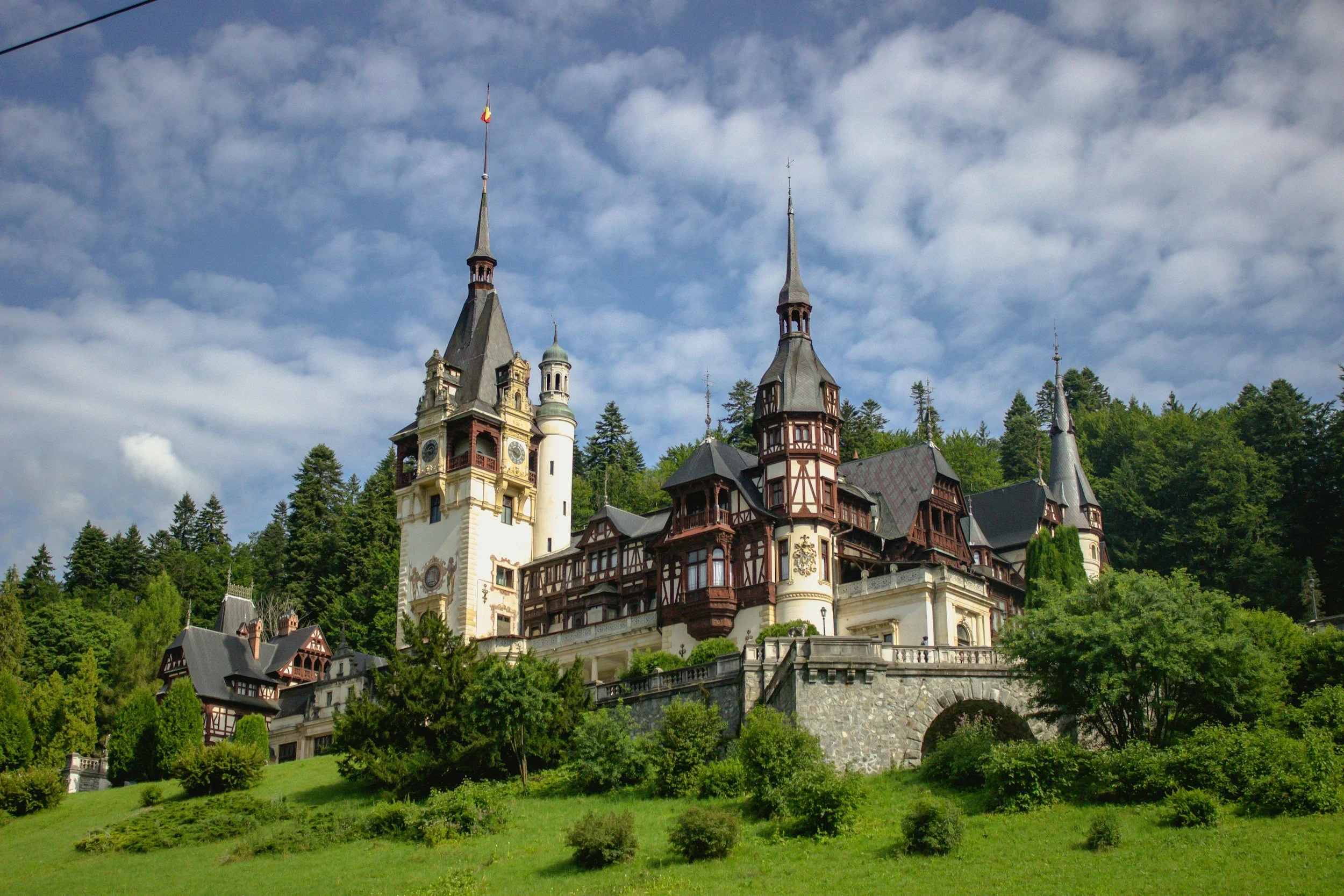
Sinaia is a tiny little mountain town which sits just south of Brașov, and the reason for its popularity is because it’s home to the most impressive castle in the entire country. Only around 10,000 people live here, but they receive many tourists (mainly day trippers) who come to look in awe at the incredible work of mankind.
Things to do:
The formal royal summer residence I’m talking about is Peleș Castle, one of the most beautifully decorated castles in all of Europe. It sits surrounded by trees at the northern end of the town, and there is some incredible places to stand and take some striking photographs. Just west of it as well is Pelișor Castle and the Knight’s House, which are much smaller royal buildings but still just as prepossessing. The big castle is one of the major highlights in all of Transylvania, and you should go out of your way to stop in Sinaia and see it. You can also walk through the Town Center, visit the Sinaia Monastery, and the The Casino of Sinaia as well.
How to get there:
You can easily train or bus from Bucharest and Brasov, plus some other Transylvanian cities.
4) Sibiu
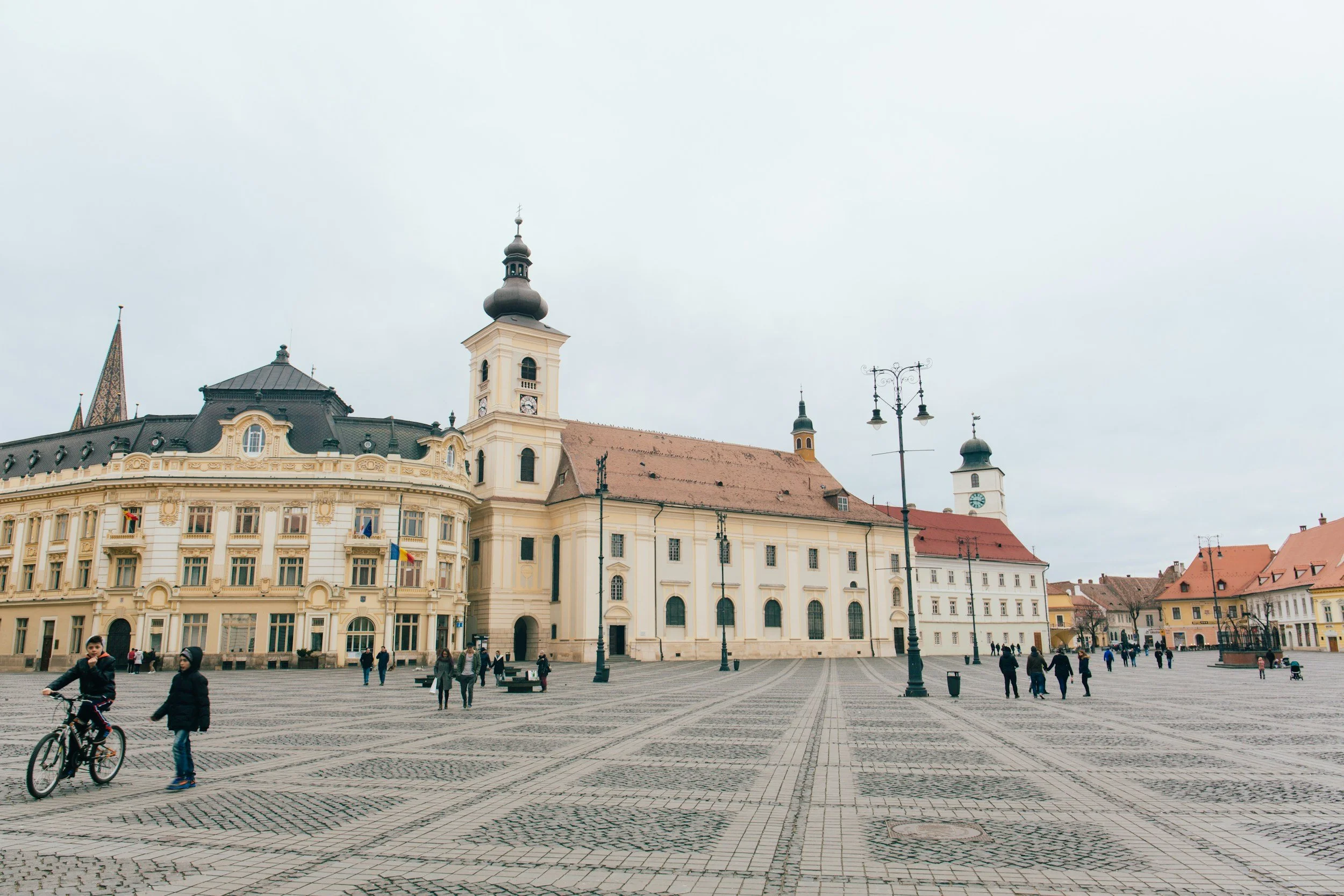
Sibiu is the fourth Transylvanian city/town on this list, and it’s just as excellent as the others. With a population of around 150,000, it;s still vibrant and attracts a lot of tourists as well as maintaining that classic Transylvanian charm with gothic architecture and narrow cobblestone streets. It’s a city, so it is much larger than both Bran and Sinaia, but still a bit smaller than Brasov.
Things to do:
Piața Mare is the center of Sibiu’s Old Town - it’s the big plaza where you can find festivals, markets, and outdoor cafés. Connected to it is Piața Mică, which is the smaller version (The names mean ‘Big Square’ and ‘Small Square’), and in both you can find all the century-old charming architecture. You’ll be able to spot the Council Tower, which is the building with the clock which you can pay to go inside and climb up for views over the lively squares. The squares are both beautiful and the core of Sibiu. Make sure you walk to the stunning Saint Mary Evangelical Cathedral, and the Bridge of Lies which has many legends associated with it too. And lastly, if you like museums go to the top one in the city which is ASTRA National Museum Complex, it shows traditional Romanian village life with wooden houses, windmills, and workshops.
How to get there:
Sibiu International Airport (SBZ) has a decent amount of European and domestic flight options.
You can also take a train or a bus from most of the major Romanian cities.
5) Sighișoara
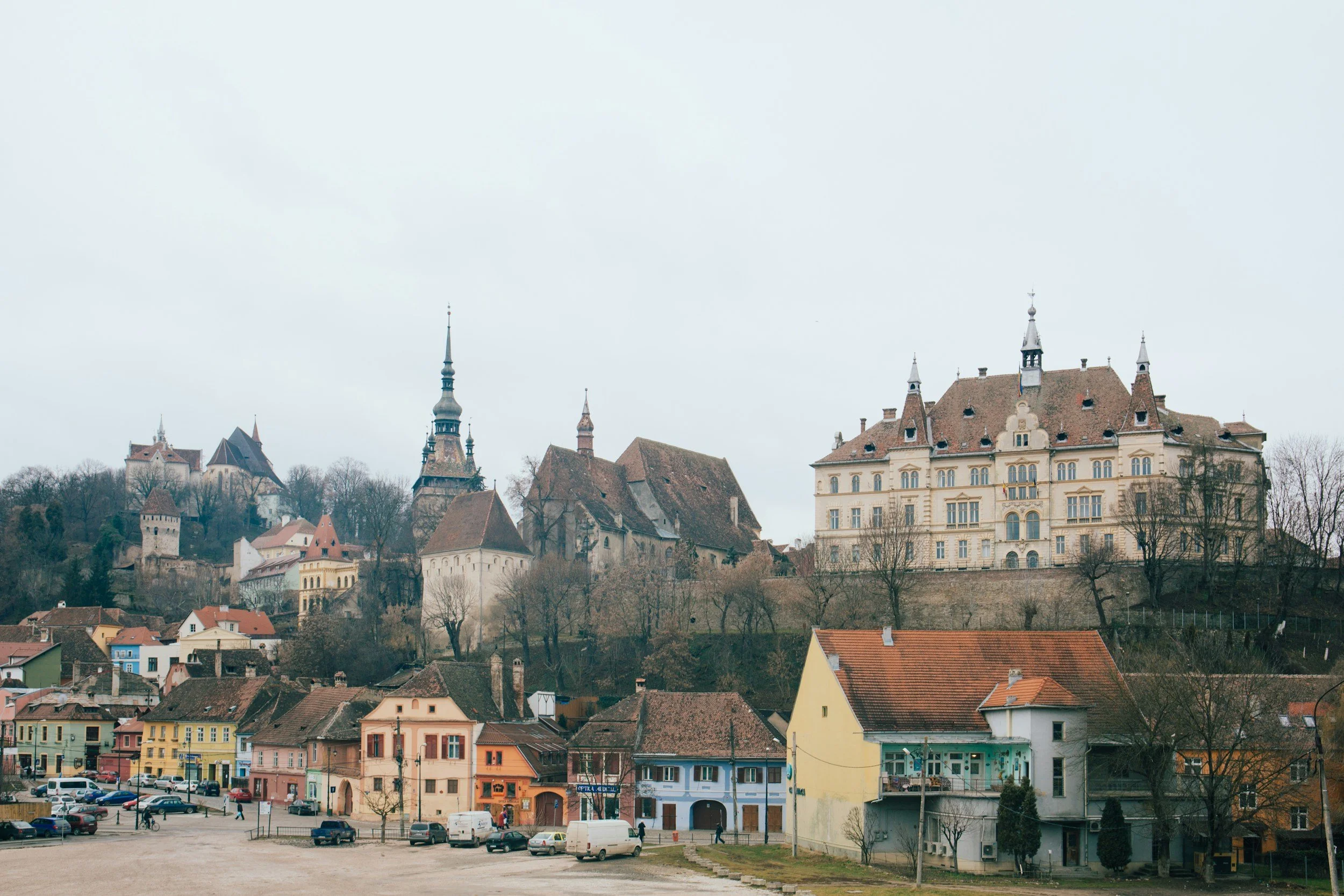
The final piece of Transylvania on this list is Sighișoara, which matches the charm of all of the previous towns mentioned. It’s perfectly preserved, and only has a population of under 30,000 people. It has a fortified old town, a walkable layout, and is another case of Gothic renaissance style.
Things to do:
The town is small and easy to explore in just a day, starting with the Old Town, and especially the Clock Tower which dominates the ‘skyline.’ The clock tower comes complete with a small museum exhibit, as well as the opportunity to head up to the top section and look over the city. Also in the old town is Vlad Dracula House, which is the please where the place where Vlad the Impaler (real life Romanian hero who inspired Dracula), was said to have been born. Up on the hill next to the historic area is Biserica din Deal, which is the pretty church that sits up on the top of the hill. It’s nice to walk around, and sort of immerse yourself into the idea that you’re in Transylvania. Mainly just spend time walking the old streets, of course visit the Main Square, and even head out to Modern Sighisoara if you prefer.
How to get there:
You can take one of the regular trains or buses from the other Transylvanian cities and all around Romania.
6) Bucharest
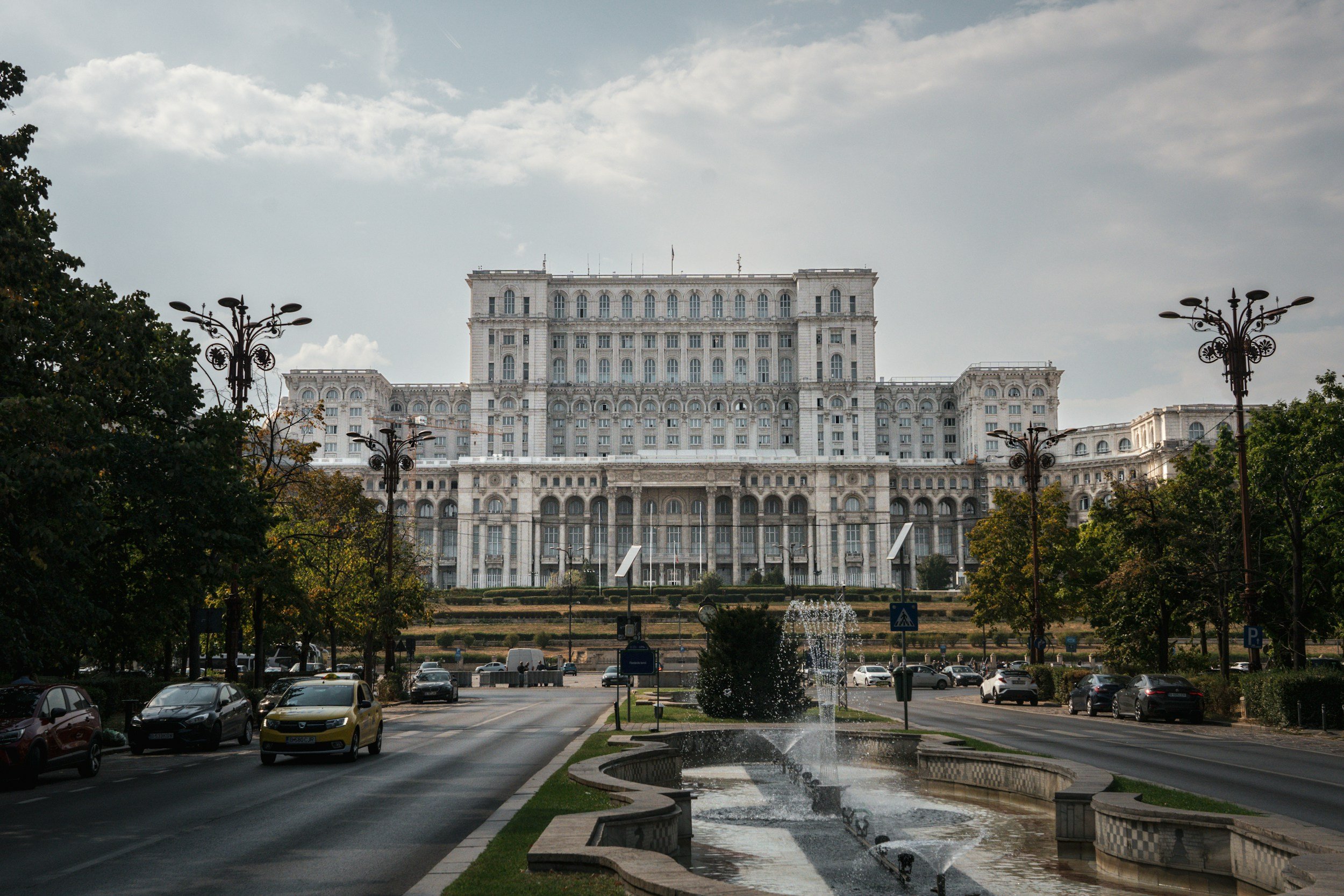
It wouldn’t be a ‘places to visit’ list without Romania’s ornate capital city of Bucharest (also called ‘Paris of the East’). It’s the biggest city in the country by a lot, with over 2 million residents spread about across the massive urban area. It’s located in the south, somewhat close to the border with Bulgaria and it’s very unique for the country - you’ll mainly see a bunch of socialist-era concrete blocks mixed in with some grand buildings, and of course the historic center.
Things to do:
As mentioned, Bucharest is pretty massive so it’s best to start with the Old Town where restaurants and cafes thrive, and you can wander the cobbled streets and check out all the souvenir places. Some cool spots inside are Stavropoleos Monastery and the National Museum of Romanian History, so look out for those. However, the old town is by no means all there is to it. Bucharest has some very cool and large buildings all over the city, starting with the Palace of the Parliament. It’s literally the heaviest building in the world and was built during the communist era. It’s the government building today and the scale is immense. Whether you like architecture or not, this is very cool to see. If you walk north of the old town towards the more ‘modern’ city area, you can head past the National Museum of Art, The Romanian Athenaeum, and a lot further north, the Arcul de Triumf. Bucharest is a great starting point before heading into Transylvania - it’s lively plus and a lot to see, and is Romania’s big urban area.
How to get there:
Henri Coandă International Airport (OTP) is the main international airport with a great connection around Europe.
Plus you can train all around Romania’s extensive train network, as well as bus from neighboring countries (e.g. Bulgaria).
Support the Site
If these guides have helped your travels, consider buying me a coffee ~ it helps keeps the content free!
buymeacoffee.com/roamingideas