The Best Places to Visit in Portugal
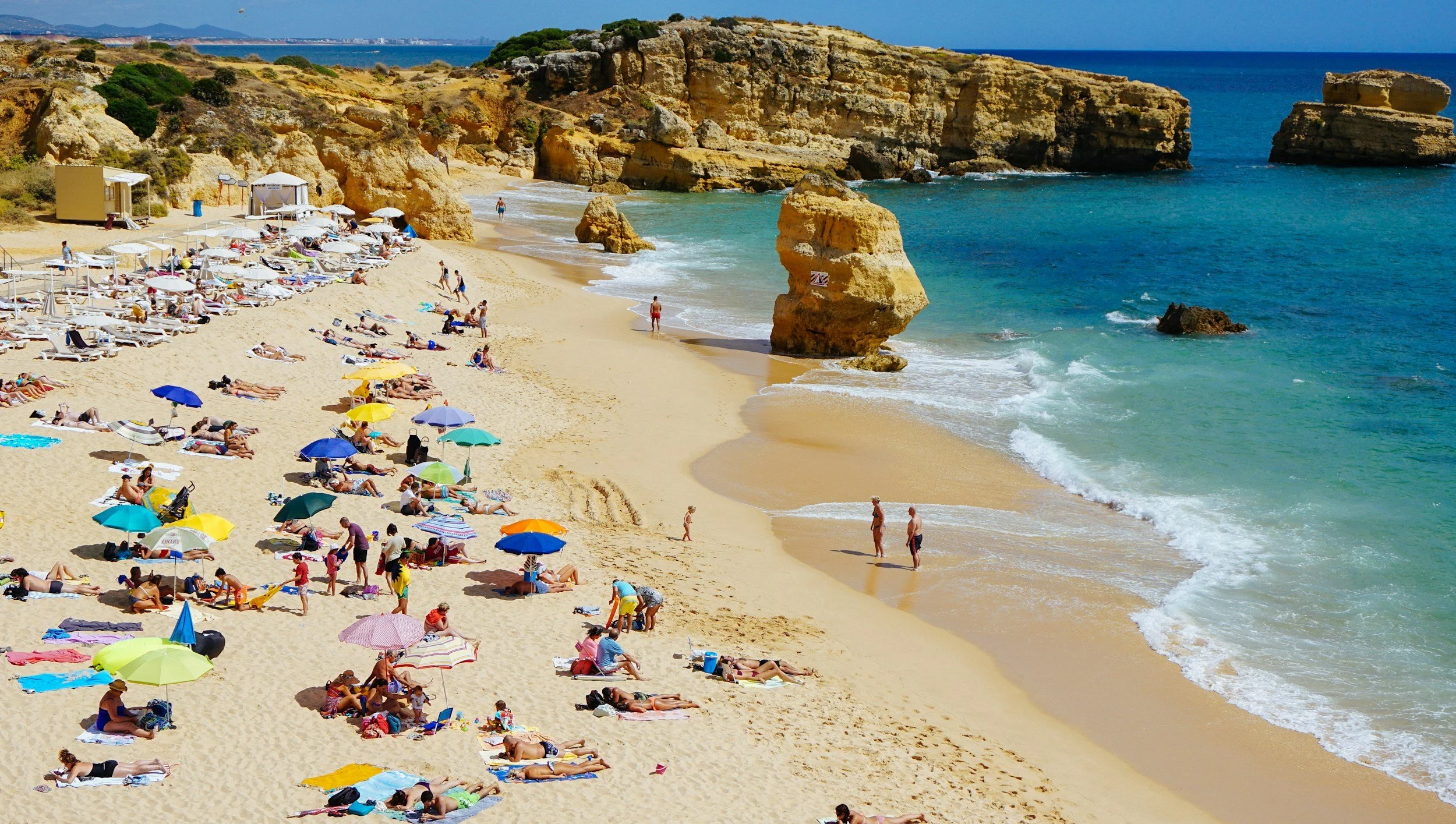
Portugal is southern Europe’s sunny Atlantic destination, and a place where amazing beaches meet some really beautiful and historic cities. Plus, Portugal also controls some of the most breathtaking and stunning islands far out into the Atlantic Ocean. Saying that, Portugal really is a destination nobody dislikes - it’s got so much to offer for everyone. Portugal had a lot of influence back in the day, as Portuguese explorers sailed to Africa, India, and South America, leaving behind a legacy of trade, culture, and architecture. It’s a country that just feels so alive and so much like a holiday, that the vibrant nature of it all makes you ‘fall in love'.’
Capital: Lisbon
Currency: Euro
Language: Portuguese
When to visit: March to November
1) Porto
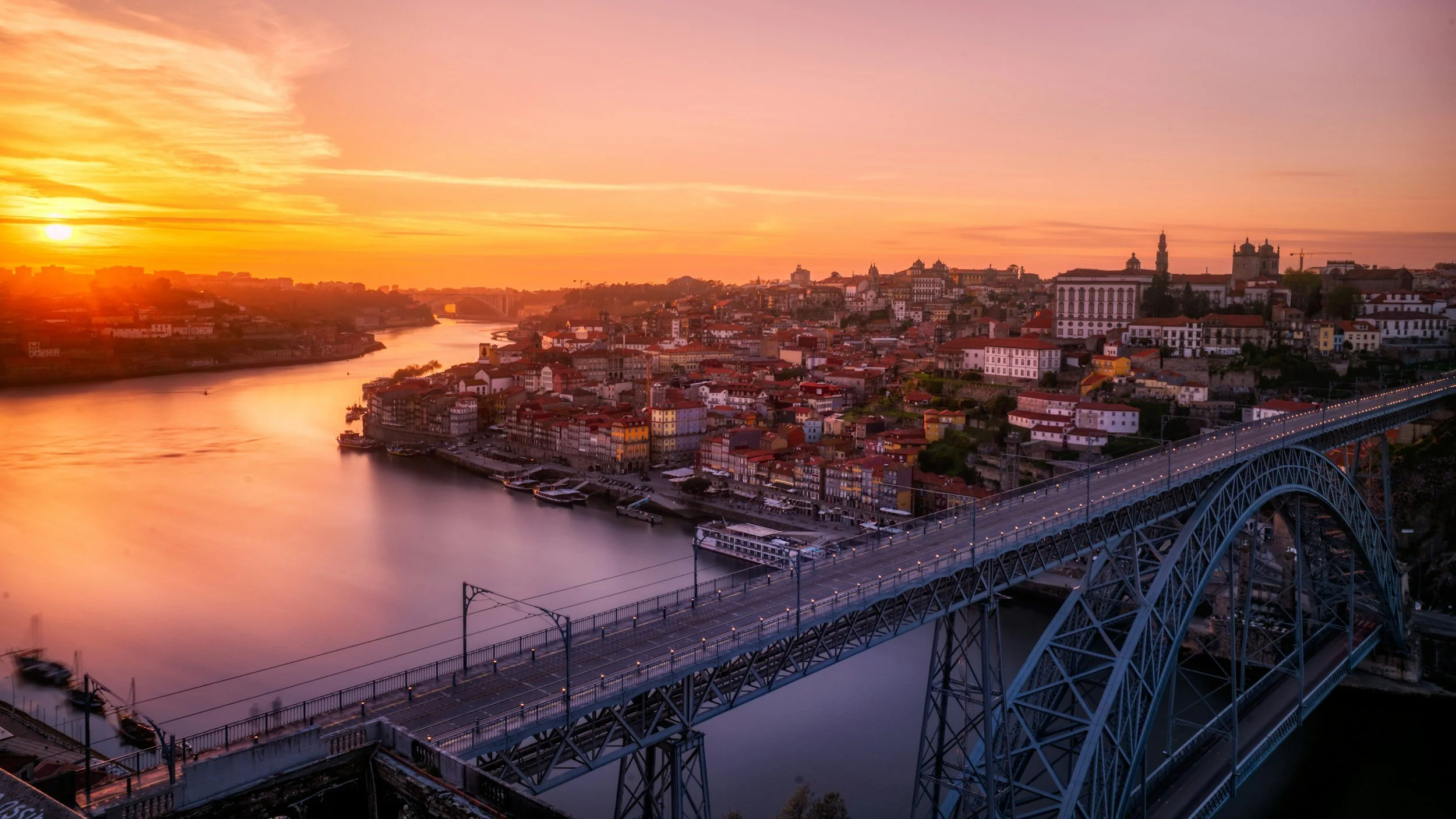
Porto is the second largest city in Portugal and is situated up in the north of the country. It’s instantly recognizable as one of southern Europe’s most amazing cities with it’s colorful rows of houses, narrow riverside streets, and incredibly vibrant and beautiful districts everywhere. It’s a big wine city, with exports leaving from the port all the time and you can feel the charm all over the city.
Things to do:
There is a lot of lively areas in Portugal, so let’s start down at the waterfront in the Ribeira District. It is the most atmospheric part of Porto, it literally has endless bars, shops, views, restaurants, fascinating architecture, just everything you want. Inside is the Porto Cathedral and also the Church of Saint Francis - two religious sites with immense beauty. And don’t forget Palácio da Bolsa, the 19th century private palace with a stunning interior. You should definitely cross the Dom Luis I Bridge and get views from across the river. North of the Ribeira is two more stunning churches worth a mention - Torre dos Clérigos, and Church of Saint Ildefonso, which sits in the lively Bolhão neighborhood that also contains Mercado do Bolhão. The Douro River is the river that runs through Porto, and if you head out west to Foz do Douro, you can see the spot where it connects into the Atlantic Ocean. Otherwise, you can spend a day taking a Douro Valley Wine tour, which is a very popular option as Porto is obviously historic for the port wines (and the scenery in the valley is beautiful anyway). Porto is a city with excellent viewpoints and scenes across the waterfront promenade, too.
How to get there:
Francisco Sá Carneiro Airport (OPO) has direct flights coming from all over Europe.
You can also take a train or bus from mainly all major cities nearby in Spain and Portugal.
2) Lisbon
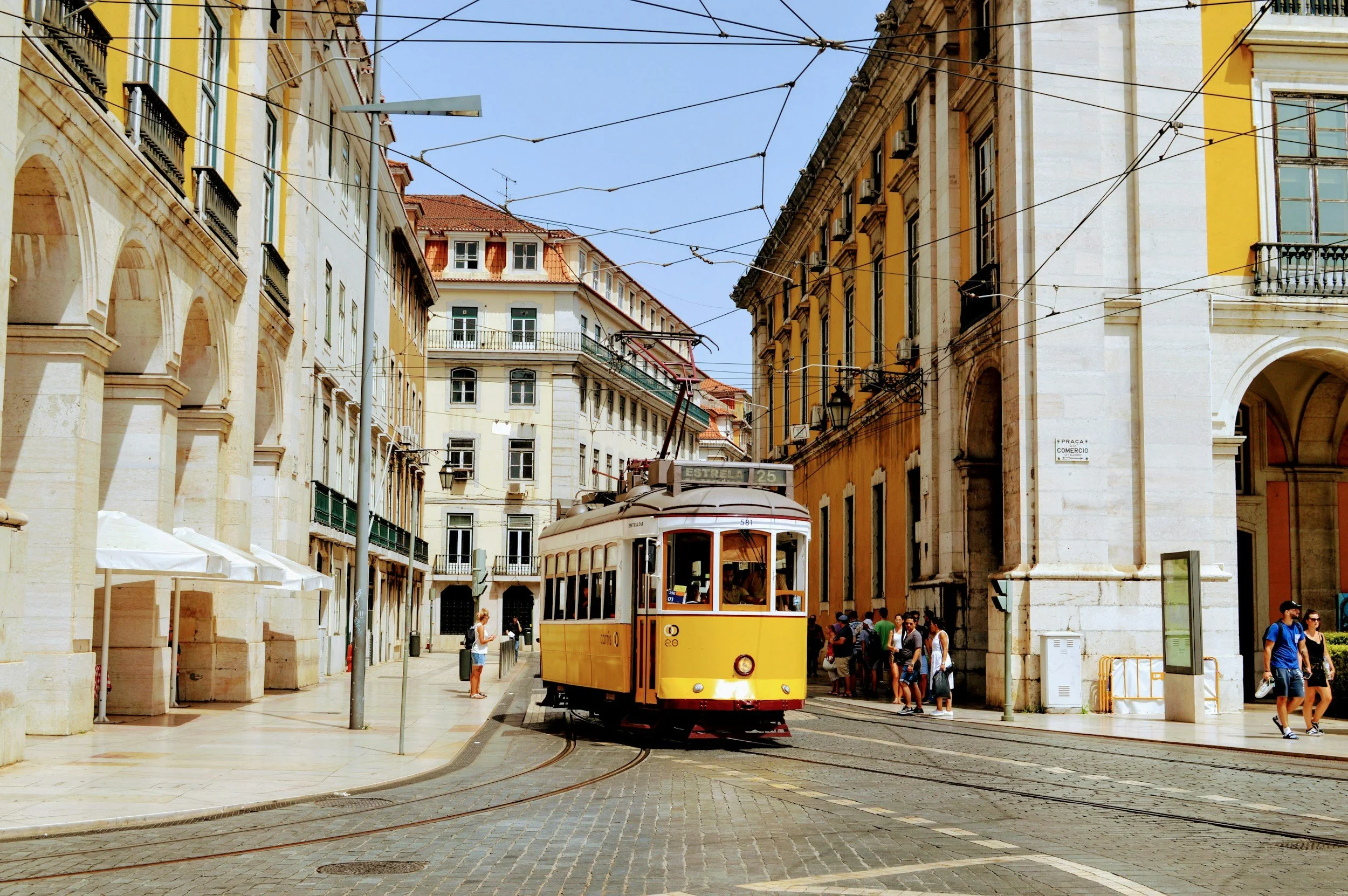
Lisbon is Portugal’s capital and largest city, and it’s a place defined by its hills. It’s known to be very steep with a lot of layered viewpoints and narrow staircases all over. It’s found down in the south of country, and contains a beautiful city center with old buildings, as well as a bunch of colorful neighborhoods scattered across this UNESCO Listed city.
Things to do:
Lisbon has a few main areas, but Baixa is mainly considered to be the ‘city center.’ It’s the elegant downtown area with grand squares like Praça do Comércio and the Arco da Rua Augusta, the beautiful gothic Carmo Archaeological Museum, Lisbon Cathedral, and the Santa Justa Lift which connects Baixa to Carmo Square. Basically connected to Baixa is the district of Chiado, Lisbon’s cultural and literary district known for librarys, shopping and a great cafe scene. Make sure you walk to Praça Luís de Camões here, which is another amazing Portuguese main square. The third and final neighborhood on the list has to be Alfama. It’s Lisbon’s oldest neighborhood and contains a bunch of steep narrow streets surrounded by historic architecture. For example, the 11th century Castelo de São Jorge and the National Pantheon (which is a little further east). Tram 28 also runs through Baixa and Alfama, which tourists love to hop on as the views are incredible. And finally, far far west of Lisbon’s center along the coast is the world famous Belém Tower, a historic fortification that once guarded Lisbon’s harbor.
How to get there:
Humberto Delgado Airport (LIS) has a great range when it comes to international flight connections across multiple continents.
You can also take a train or bus from mainly all major cities nearby in Spain and Portugal.
3) Sintra
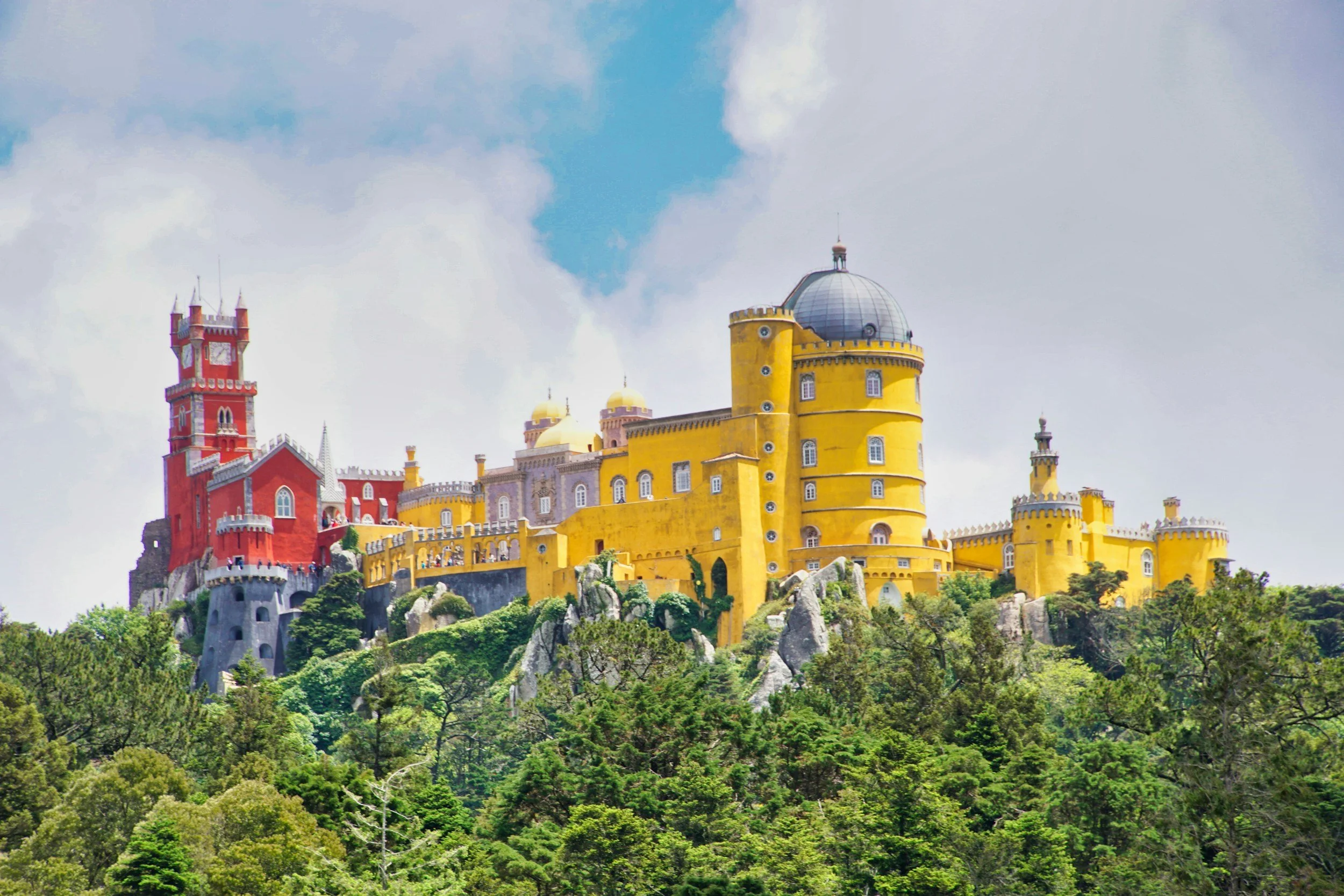
One of the most otherworldly places in Portugal, and a classic day trip from Lisbon is the town of Sintra and it’s breathtaking historical sites. The town itself is pretty small, just nestled away north of Lisbon. However, it’s the place where you can see some truly awe-inspiring palaces and castles on its outskirts.
Things to do:
Up in the hills and the Sintra Historic Center are so many incredible places, so let’s go through them all. Starting off with the National Palace of Sintra, which sits in the midst of the Centro histórico, and is instantly recognisable thanks to the white twin chimneys. The heart of town in general is pretty tiny, so now we head into the elevated areas. Firstly head west and see the Quinta da Regaleira, a mysterios yet super cool looking estate castle from the early 20th century. Then go down south to the The Moorish Castle, walk the stone walls, then continue down until you reach Sintra’s most insane spot - the National Palace of Pena. It’s the most iconic sight in Sintra thanks to the red and orange colored design and crazy atmosphere you feel from being up in the hills. Don’t just walk around though, I’d also recomend finding a viewpoint from below and seeing it from a different angle. The other center of Sintra, just called Sintra Center (not historic) is also nice, especially the Casa Dorita Castel-Branco.
How to get there:
Simply take a regular train or bus from Lisbon, or one of the coastal towns with connections.
4) Madeira
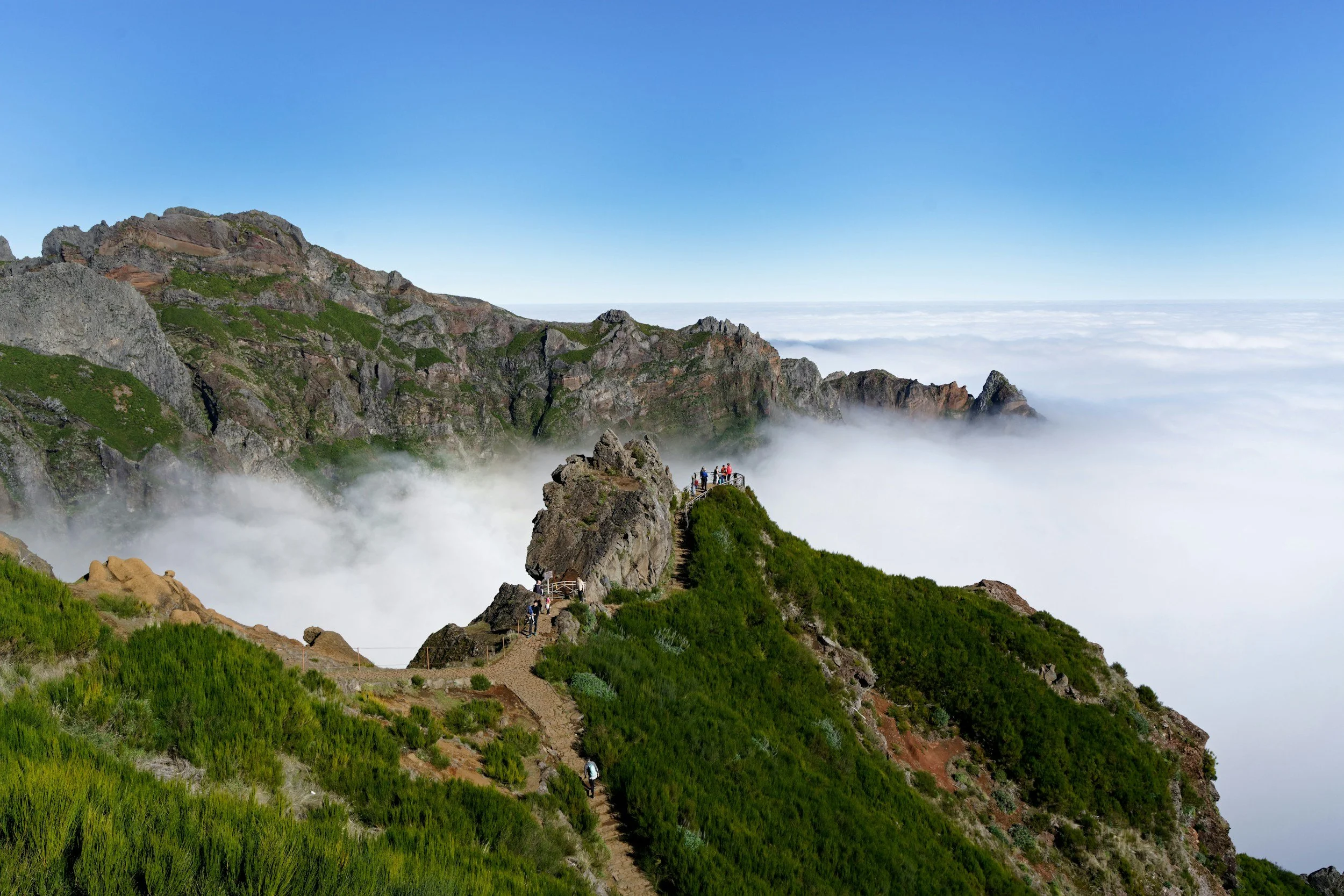
Far out in the Atlantic Ocean west of Morocco is the Portuguese controlled archipelago of Madeira, one of the most beautiful places in the entire world and a top spot for hiking globally. While it is technically 4 islands, the main island just called ‘Madeira’ is the place to go, thanks to it being dominated by steep volcanic mountains and dramatic cliffs, as well as the lush green forestry everywhere. Madeira wasn’t discovered until the 15th century, and it’s lucky they found it because it’s a once in a lifetime isolating experience.
Things to do:
Most of the population is concentrated in Funchal on the south of the island, so let’s start there. Walk around Funchal Old Town and Funchal Harbor, check out the local markets, and stroll through the colorful streets. Then, you can even head up to Monte, the hillside neighborhood above Funchal and home to Monte Palace Tropical Garden. Then, continue west along the coast to Cabo Girão. The viewpoint here is one of the highest sea cliffs in Europe, with a glass skywalk that gives insane views over the coastline, so it' is indeed a must do. Luckily in Madeira, the hikes are simply named with PR(number), so my compilation of the best hikes starts with PR1, which is the most famous and connects the 3 peaks of the island. If you only do one hike, do this. My other recommendations are PR8, PR6, and PR9. Madeira is beautiful everywhere, and my last stop on the list is Porto Moniz, which is a super scenic town containing the islands best volcanic swimming pools. I’d maybe even suggest you rent a car to save you most of the stress.
How to get there:
Cristiano Ronaldo International Airport (FNC) lands you in Funchal, with flights from Portugal and some other European cities.
5) Algarve
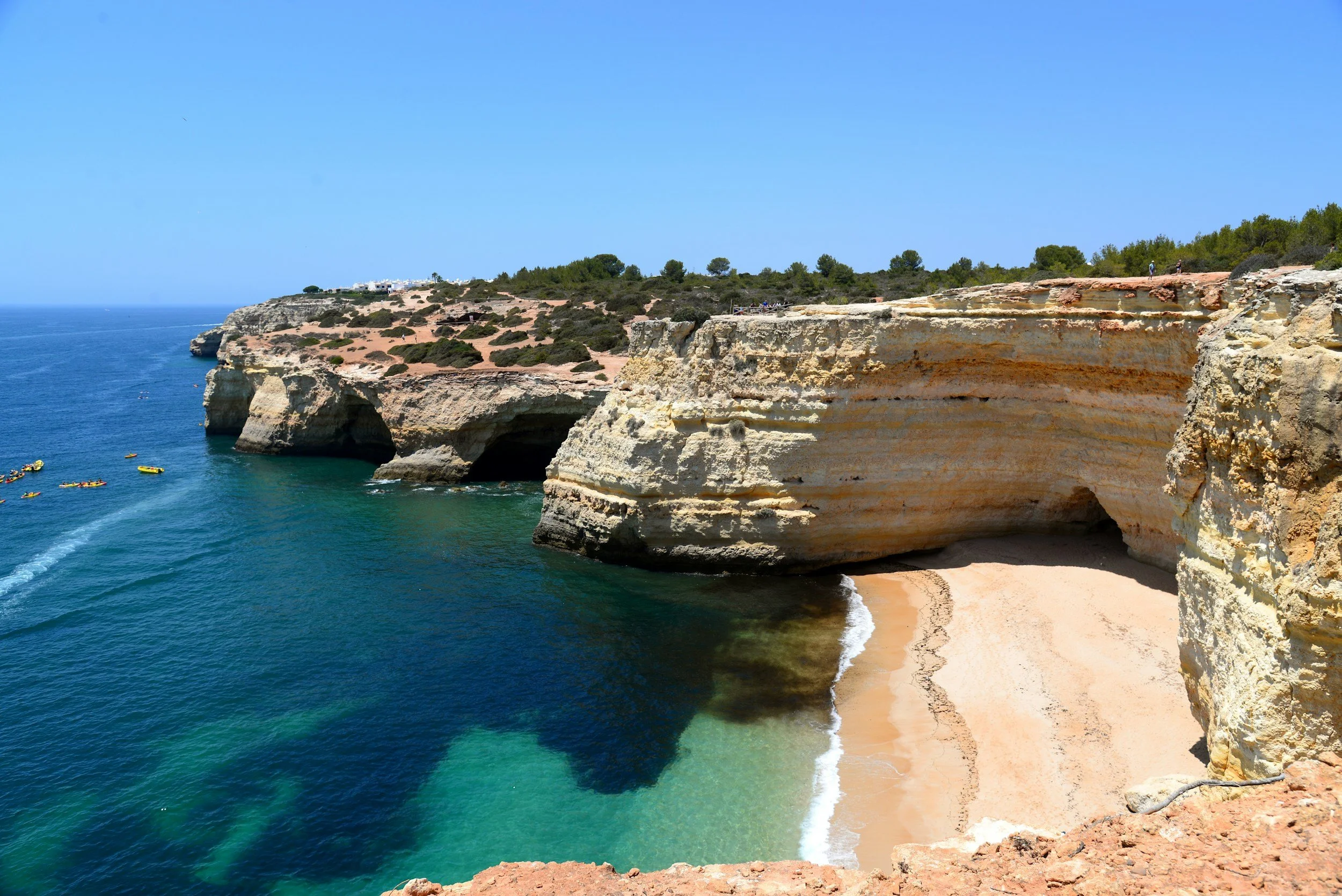
The Algarve is Portugal’s southernmost region in the country, and the place you will find the most magical beaches and dramatic cliffsides. There is an endless amount of coastal towns which sit along the entire region, with some being a lot more famous and tourist friendly than others. Everyone’s trip to the Algarve is gonna be pretty different depending on your destinations. The only thing certain is that you’ll see some golden beaches and have an amazing time in the sun.
Things to do:
The main entry point to the Algarve is the town of Faro. It’s charming; with Faro Old Town being cute and walkable, and Ria Formosa Natural Park being a cool nearby lagoon. However, I don’t think Faro is the best spot in the region. If you like parties, take the bus further west and hop off in Albufeira. It also has a lovely Old Town, but the nightlife is iconic in Portugal. It revolves around clubbing, drinking, parties - all centered around The Strip. Anyway, moving away from Albufeira, you can keep going and you’ll find the city of Portimão. Praia da Rocha is here, and it’s one of the regions most famous beaches. Portimão is more of like a bustling port city and a good hub for adventure activities. Not far from here is the absolutely beautiful town of Lagos. The beach of Meia Praia seems like it goes on forever here with it’s hot golden sand. Head out to the southern point of the Lagos area, which is called Ponta da Piedade. This is a place you may have seen in the photos, as the dramatic rock formations here are so cool. There are some more options you could check out like Sagres or Silves, but in my opinion Lagos is the top spot, plus it’s not far from Portimão anyway.
How to get there:
Faro Airport (FAO) is the main gateway to the Algarve.
From Faro, you can bus to all over the Algarve region. You can also take a bus or train into the Algarve from Porto, Lisbon, etc.
6) Azores
Now we head even further into the Atlantic Ocean to a group of nine volcanic islands called the Azores. It’s so remote, yet still accessible at the same time. It’s genuinely home to some of the most impressive landscapes on earth, all in one place. The main attractions are the crater lakes, dramatic coastal cliffs, and of course the green mountains all over every island. It’s a wild place and every island is pretty unique.
Things to do:
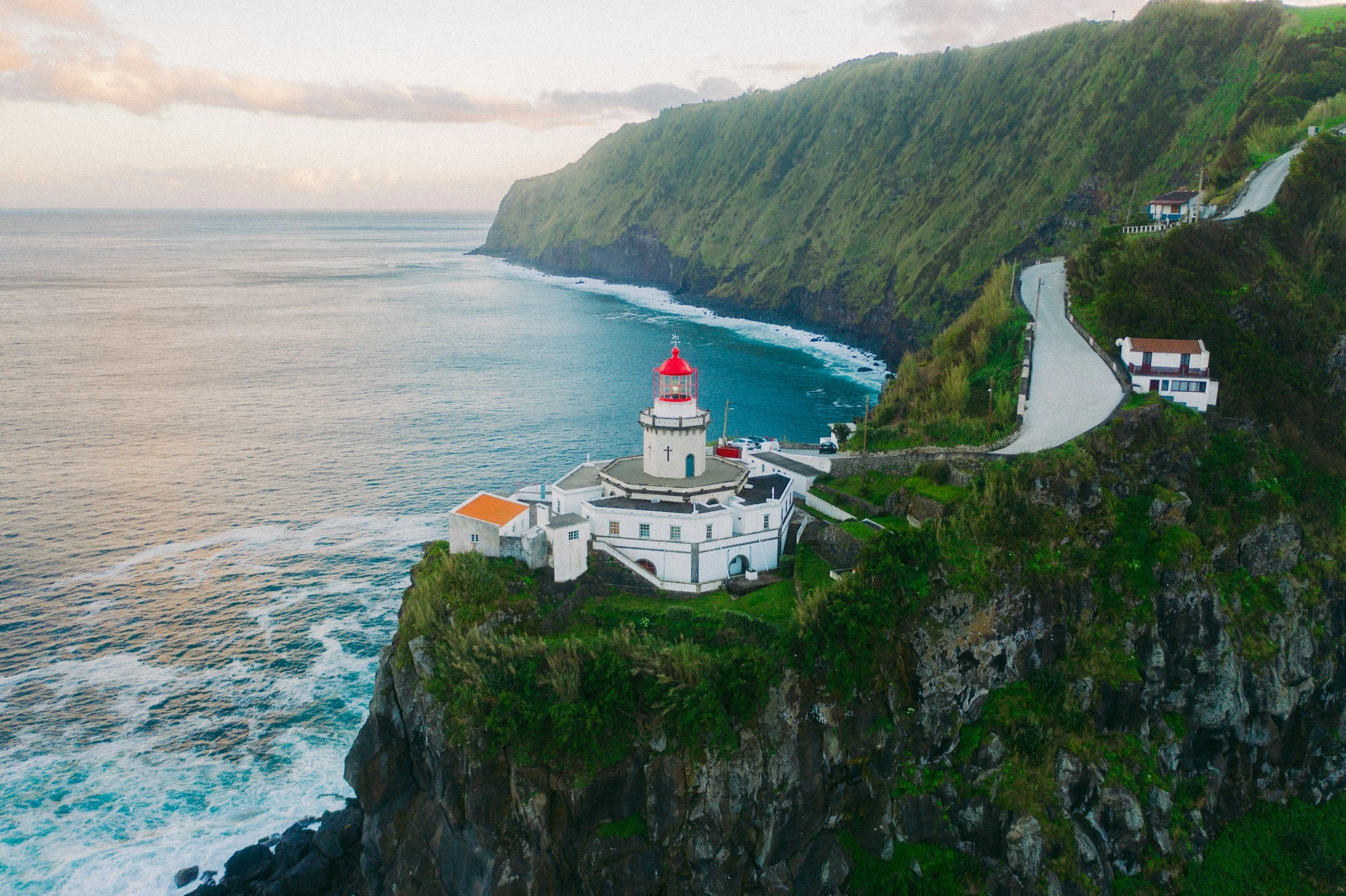
The biggest island of São Miguel is where you’ll head into when you first arrive at the Azores. Ponta Delgada is the largest city on this island, so visit the Historic Center, check out the old streets, and maybe some churches like Igreja Matriz de São Sebastião. As soon as you can, make your way to the Sete Cicades. Walk around the rims, stop at viewpoints like Vista do Rei, and take in the dramatic blue and green twin crater lakes which are very cool to see. Next, move east toward Furnas, the geothermal heart of the island. Here, you can see fumaroles steaming from the ground, and definitely take the opportunity to hike up to Miradouro do Salto do Cavalo, as the view is really good. On the very far east of Sao Miguel sits Miradouro da Vista dos Barcos, the iconic lighthouse with incredible views and photo opportunities of the ocean. But if you love an extreme and awesome hike, get on over to Pico Island, and do the Mt Pico Peak Hike. In my opinion this is the best thing to do in the islands; You’ll be at the top of a literal volcano, it’s the highest point in Portugal, and you can stand above a whole crater at the peak. The views of Mt Pico are so good, even looking from down below.
How to get there:
João Paulo II Airport (PDL) is on Sao Miguel and has flights from Portugal. You can then simply take ferries between all the islands.
7) Evora
Évora is a historic city about 130 km east of Lisbon, and it is pretty famous for its Roman and medieval heritage. It was declared a UNESCO World Heritage site because the medieval town is so well preserved and a great spot to visit for history lovers. It only has around 60,000 people, but that makes it enchanting and a good way to see Roman architecture while escaping crowds.
Things to do:
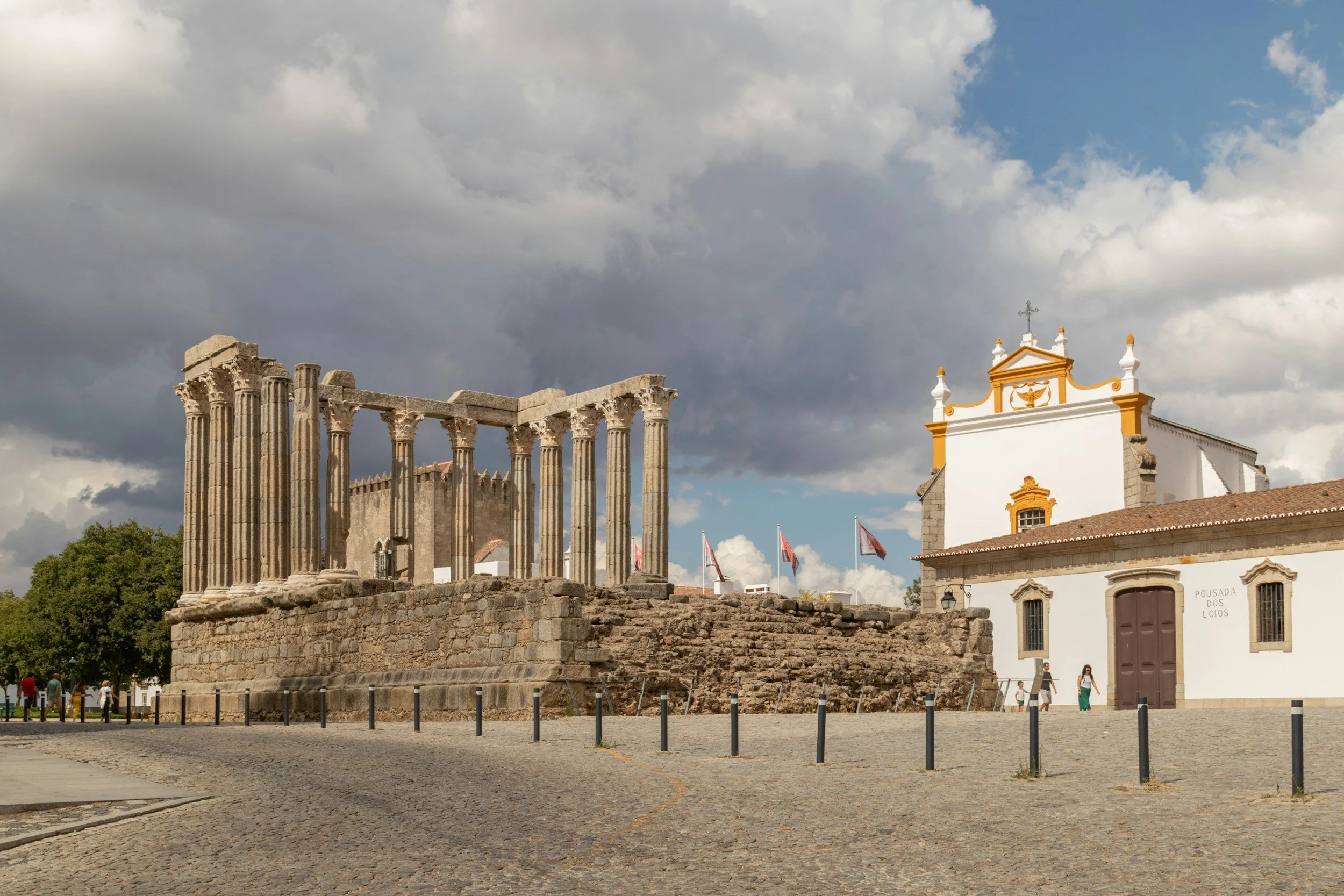
Smack bang in the middle of Evora’s historic center is the Roman Temple of Évora, which dates back to the 1st century AD and still has several columns intact. Right down the street is the Cathedral of Évora too, which is a very big complex especially for a cathedral in a small town. It’s super cool in design and one of Portugal’s oldest medieval cathedrals. Giraldo Square is the main square of the town, and the best start for wandering around the historic side streets and exploring some of the nearby palaces. For a bit more of an eerie final suggestion, you can go to the Chapel of Bones which is quite daunting, yet fascinating site inside the Church of St. Francis, decorated with thousands of human bones.
How to get there:
Take a train or bus from Lisbon to Evora.
Support the Site
If these guides have helped your travels, consider buying me a coffee ~ it helps keeps the content free!
buymeacoffee.com/roamingideas