The Best Places to Visit in Greece
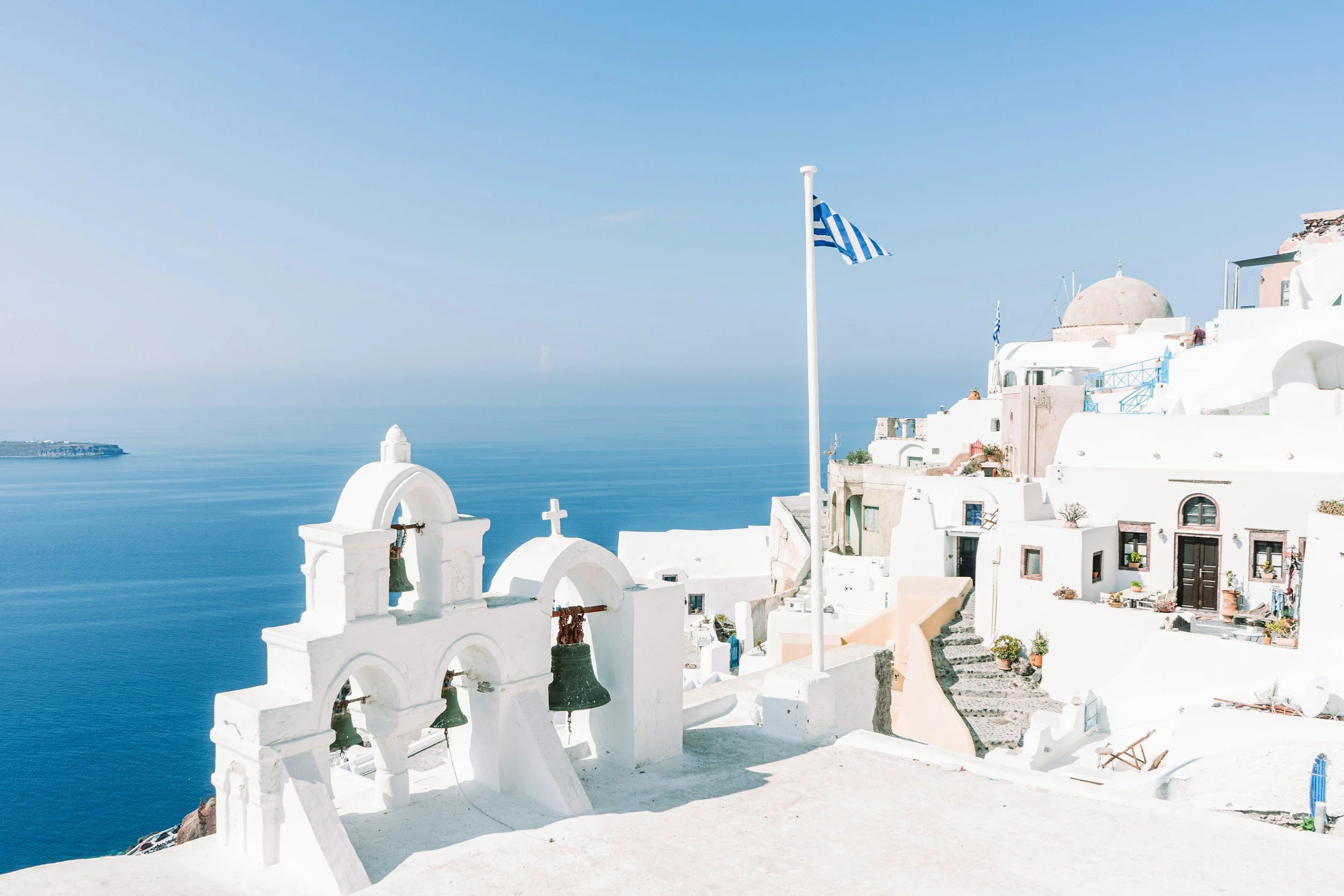
Greece is a beautiful Mediterranean country famous for its incredible coastal charm and ancient history. Greece is home to over 6,000 different islands, 227 of which are inhabited and magical. The food here is delicious, and overall you can feel the relaxed, welcoming vibe across the country. In summer, Greece’s tourism levels explode - you’ll see a tourist literally everywhere you look. It’s hard to blame them though, as the country has so much to offer for every style of traveler. Historically, Greece goes way back, Alexander the Great himself was born here, and it was also the lands of Roman and Ottoman rule, as well as much more. From the mainland to the islands, Greece is one of Europe’s top destinations for the sunny months.
Capital: Athens
Currency: Euro
Language: Greek
When to visit: May to October
1) Mykonos
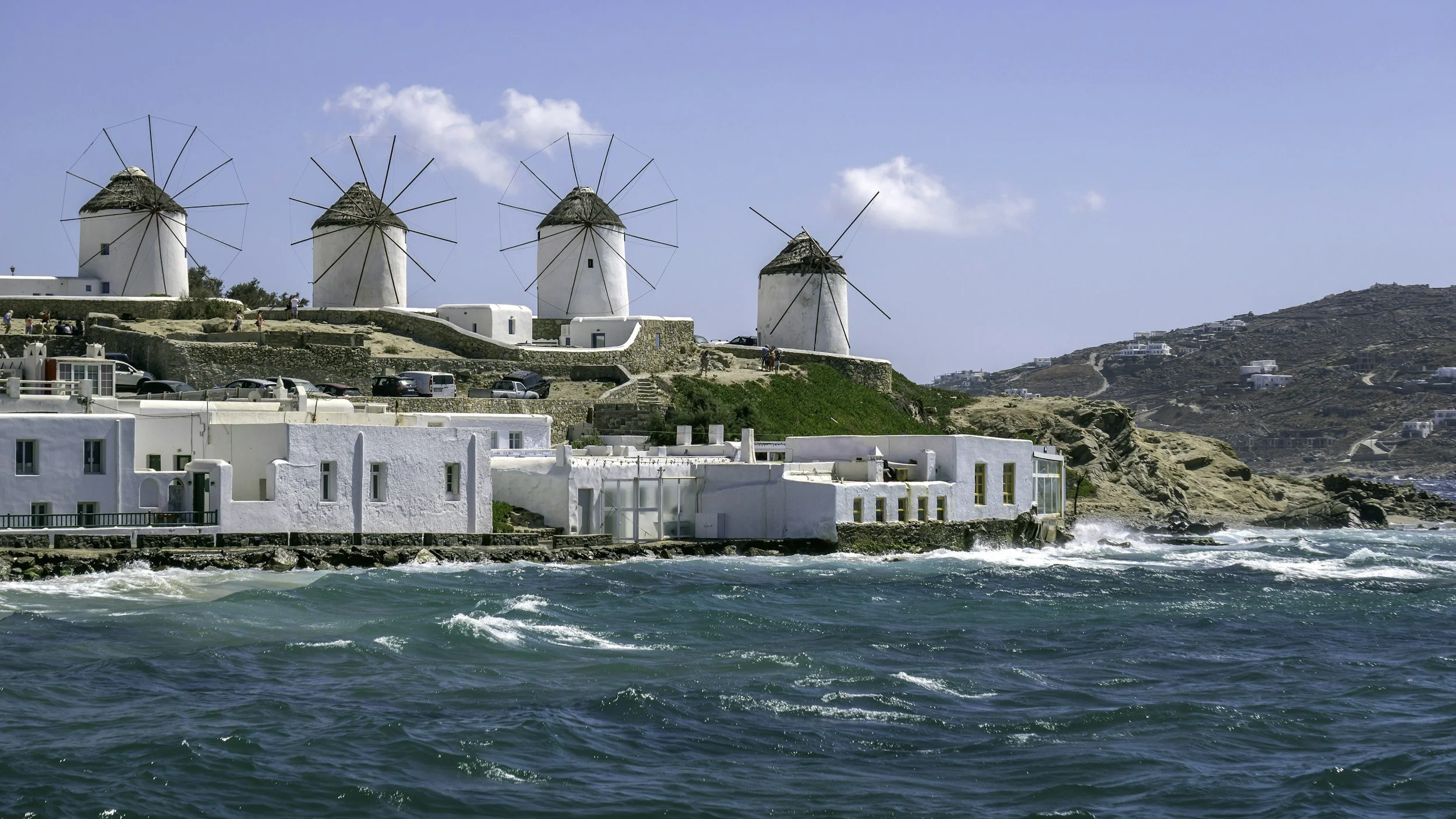
Mykonos is one of the most famous islands in the Cyclades group in the Aegean Sea, Greece. It’s best known for its beautiful beaches, intense nightlife and the classic white-washed Cycladic architecture. This same style is very common across many Greek islands, so Mykonos is one of the best places to start with. People have lived on the island for thousands of years, but modern mass tourism really kicked off in the 1950s, and since then it has developed a very glamorous, high-energy atmosphere that attracts island-hoppers from all over the world.
Things to do:
The island of Mykonos is filled with little villages, so you can start in the town of Mykonos. It’s got beautiful white streets and historic architecture such as Panagia Paraportiani Church. Walk down to the romantic neighborhood of Little Venice, and just explore (It’s amazing at sunset). Then, you should see the iconic Windmills (Kato Mili), possibly the most photographed spot on Mykonos Island. With all the attractions out the way, it’s time for beaches (The reason most of us go to Greece): Paradise Beach, Fokos Beach and Elia Beach, however you can’t go wrong anywhere.
How to get there:
Mykonos Airport (JMK) offers many connections from not just Greece, but all around Europe too.
You can also easily get a ferry from the main port in Athens, or other islands in the region like Santorini or Paros.
2) Athens
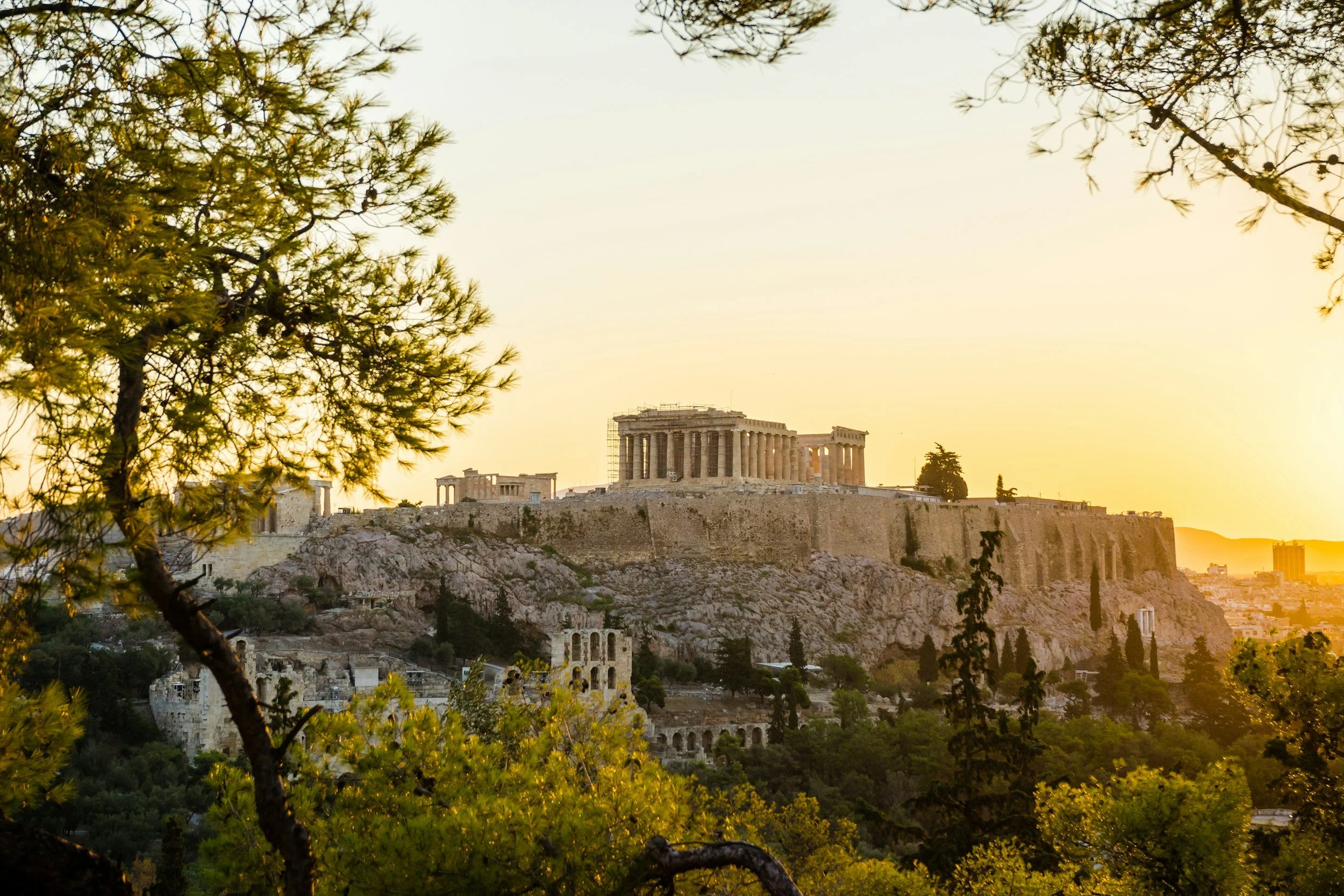
Athens, the capital of Greece, is one of the world's oldest cities and widely regarded as the cradle of Western civilization. It's where democracy, philosophy, theater, and many foundational ideas of art, science, and politics were born thousands of years ago. Named after the goddess Athena (goddess of wisdom), Athens has been continuously inhabited since around 3000 BC. There’s so much for tourists to see, especially when it comes to ancient history and lively neighborhoods.
Things to do:
Obviously the big one is to visit the Acropolis. Climb up the hill to the site, and check out all the ancient ruins such as the Parthenon, Erechtheion, Temple of Athena Nike, and more (The Acropolis Museum is at the hill’s base). Back down in the city, Wander the Plaka neighborhood - it’s filled with souvenir shops, beautiful streets, and Byzantine churches. Inside is also Anafiotika, a very scenic part of Plaka which feels like a mini Greek island inside the city. Close to Plaka is the Temple of Olympian Zeus, which you can walk through via Hadrian’s Arch, another impressive ruin. Then head to Monastiraki Square, a place buzzing with energy and people, and a great place to shop as it holds a massive weekend flea market. Also check out the Temple of Hephaestus, where in the same area you’ll find some more archeological sites to complement it. Look back up and you’ll see views of the Acropolis from down there too. Overall, there is so many historic sites in Athens it is essentially impossible to list them all, so make sure you walk the city streets and take it all in.
How to get there:
Athens International Airport (ATH) is a major hub for flights from Europe, and you can get routes from so many countries.
You can train direct from Thessaloniki, but Greek trains don’t have the best reputation.
Bus options are available with companies like FlixBus from many Greek towns and cities, as well as some international cities.
Ferries also come in from all the main Greek tourist islands, and on occasion, from Italy too.
3) Santorini
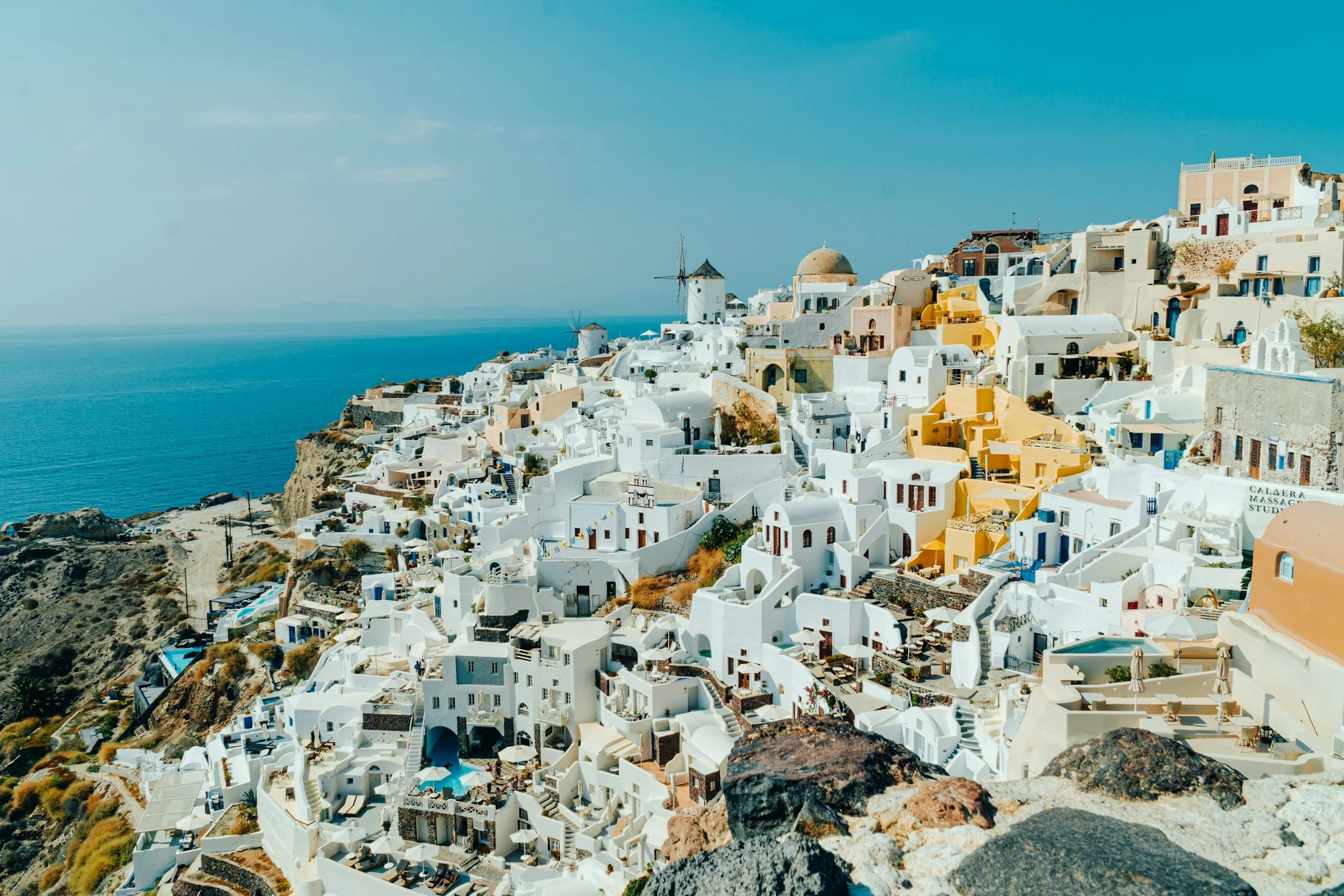
Santorini is one of the most photographed and visited islands in the Cyclades island group, and just Greece in general. It's best known for its dramatic volcanic caldera, whitewashed villages perched on cliffs (again), blue-domed churches and unforgettable sunsets. Santorini’s main island is about 76 km², with steep cliffs all around. It attracts millions of visitors annually, so you have to expect tourists (and a lot of them). It’s a beautiful island anyway, but expensive for sure.
Things to do:
The capital of the island is Fira, which is a pretty, walkable village. However the main postcard spot is in Oia, where the incredible sunsets are and the iconic blue domed buildings. A great option for hikers is to do the Fira to Oia Caldera Rim Hike, which is about 4 hours with insane views. On Santorini there are also two incredible archaeological sites - Akrotiri and Ancient Thera. Akrotiri is even known as the Pompeii of the Aegean and both have fascinating histories. Lastly, check out Red Beach, a super cool beach with a unique volcanic look.
How to get there:
Santorini Airport (JTR) has flights coming from Athens all the time, as well as seasonal ones from around Europe.
Otherwise, get on a ferry from either Athens, or any of the other islands in the archipelago.
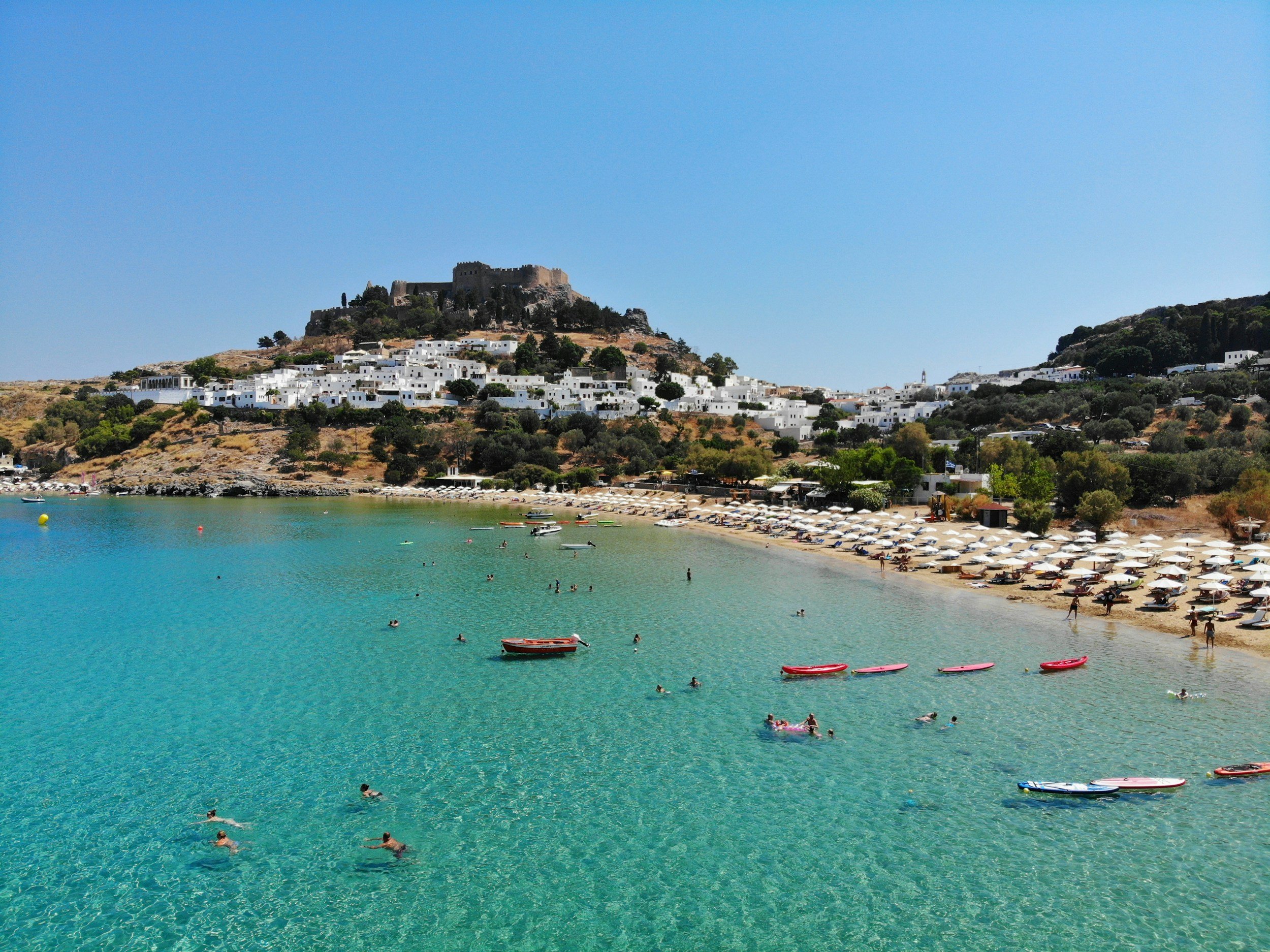
4) Rhodes
Rhodes is the largest island in the Dodecanese group in the Aegean Sea, and a super popular spot for tourists. It’s very close to the coast of Turkey, and is the 4th largest Greek island overall. Over 125,000 people live on Rhodes amongst it’s many villages, and the city was founded in 408 BCE. The appeal of Rhodes comes from the amazing beach selection, ancient ruins, and the more modern kind of feel compared to some other Greek islands.
Things to do:
Start in the main city of Rhodes at the very tip of the island. It’s a very historic settlement, with Medieval City Walls and Gates you can explore, as well as cobblestone avenues like Street of the Knights. The big castle you’ll see in the city is called Palace of the Grand Master of the Knights of Rhodes, and it was constructed in the 14th century. You can of course tour the insides. Check out the Turkish Quarter of the city too, it has some old mosques and Ottoman-Era buildings. Lastly in the city, walk Mandraki Marina and Port for a taste of the seaside. On the rest of the island, you have the top ancient site - Lindos Acropolis. It’s a dramatic hilltop acropolis with Doric columns, temple ruins, and views over St. Paul's Bay. Besides swimming, my final recommendation for Rhodes is to walk through Valley of the Butterflies, it’s a peaceful hike/walk with some nice views of streams, waterfalls and forests.
How to get there:
Rhodes International Airport (RHO) is a quick and easy way to get here from Athens.
For ferry options, Athens is there too, but you can also come via other islands like Kos, Symi, Patmos, Kalymnos, Crete, etc.
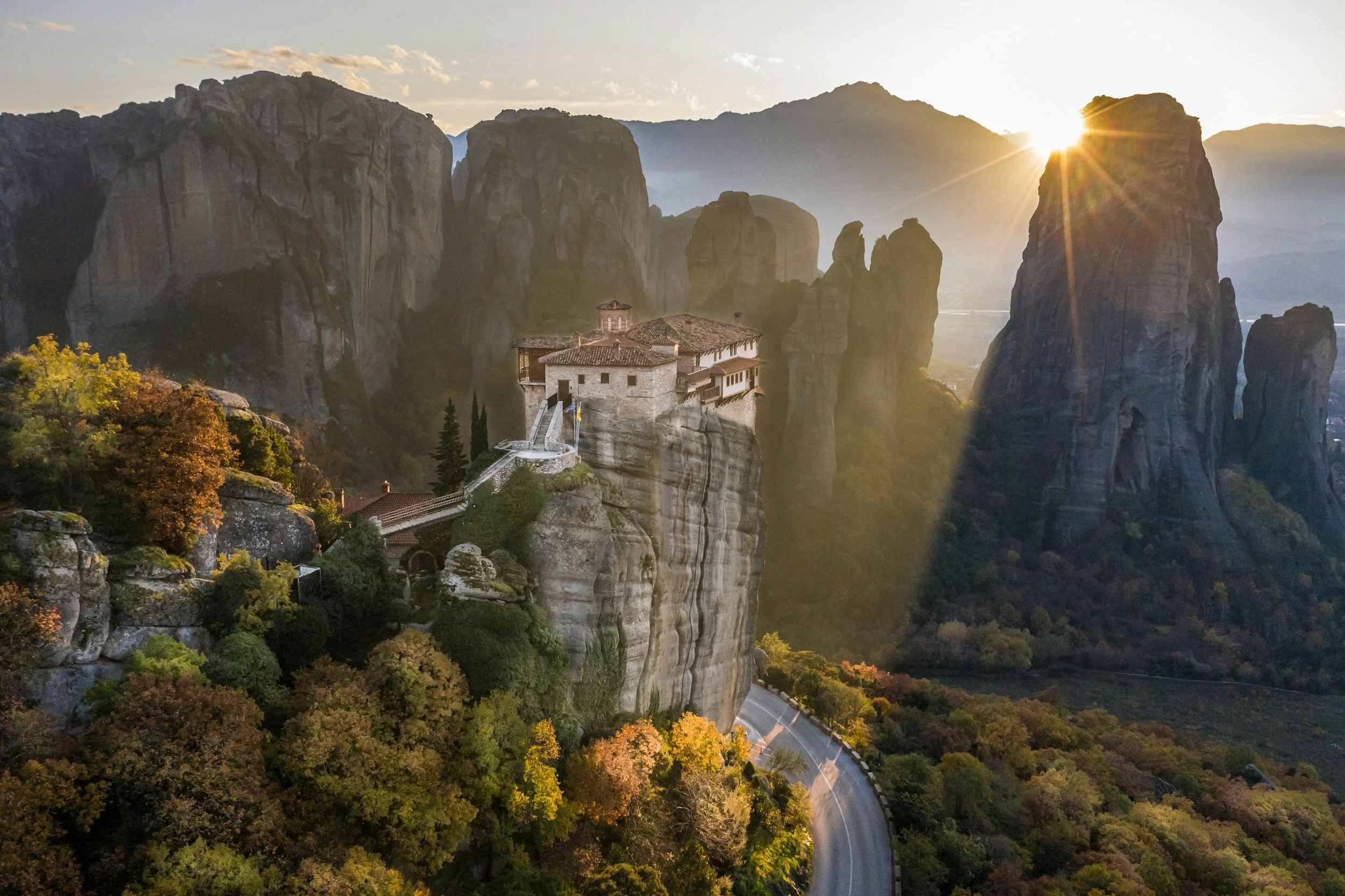
5) Meteora
Meteora is a striking rock formation and UNESCO World Heritage site in central mainland Greece, and is one of the most incredible sights in the entire country. The name refers to the formation of the towering cliffs, which have Eastern Orthodox monasteries built at the top of them. The rock pillars were formed about 60 million years ago, and some reach up to 600 meters. There are a couple small towns in the area making Meteora an amazing spot to stop for anyone in Greece’s mainland.
Things to do:
The main towns serving as the base are Kalabaka and Kastraki. Both have some nice areas and main squares, but that’s not what we come for. There are six active monasteries in Meteora: Great Meteoron, Varlaam, Roussanou, Holy Trinity, St. Nicholas Anapafsas and St. Stephen. Each of them have something unique to offer and it’s worth going to all, if you can. The best way to experience Meteora is to hike the Grand Monasteries Circuit. It’s about an 8km loop and connects the 6 active monasteries. While there are other trails, if you’re here once then you should do this one.
How to get there:
The best way to get here (excluding car) is actually via train. You can go direct from Athens and Thessaloniki to Kalabaka. (Note: Some of the services are known to have been cancelled/paused due to infrastructure issues, so check local sites).
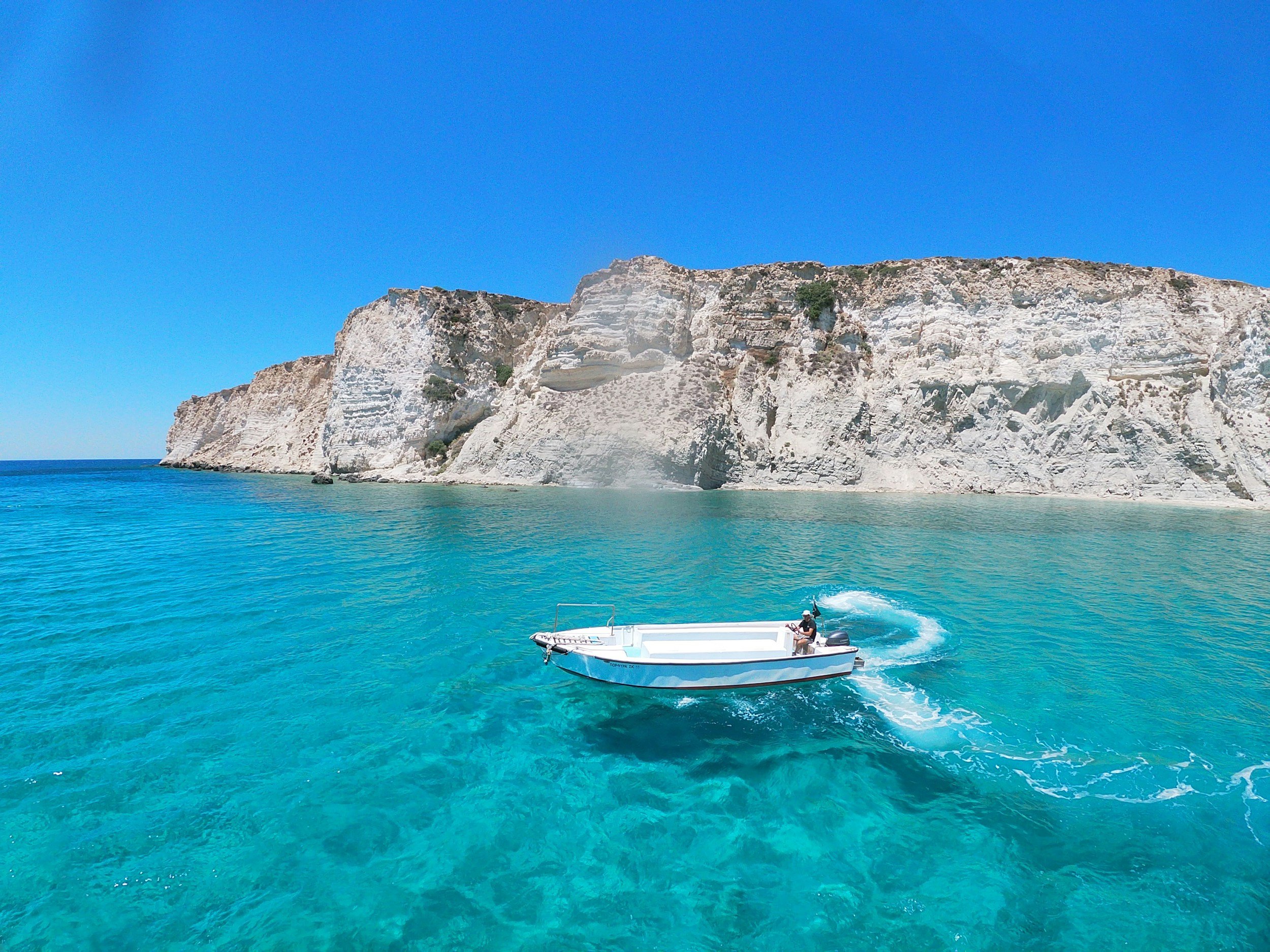
6) Crete
Crete is the largest and most populous island in Greece, located in the southern Aegean Sea, separating it from the main Mediterranean to the south. It's also the fifth-largest island in the Mediterranean overall. It’s special for it’s large mountainous regions and variety of beaches. Over 630,000 call Crete home, but millions make their way to Crete for holidays every single year.
Things to do:
The main historic cities you should pick to visit on Crete are; Heraklion, Chania, and Rethymno. All three of these cities have incredibly beautiful Old Towns for you to wander through, as well as beautiful waterfronts and a great atmosphere. The big draws of the island come from the beaches and swimming spots though, so here’s my list of the best places to experience that in Crete: Elafonissi Beach, Balos Lagoon, Falassarna, Seitan Limania and Vai Palm Beach. Lastly, one really good hike in the island is the Samaria Gorge Hike. It’s about 16-17km long and pretty challenging, but you get views of Europe’s longest gorge which makes it so worth it.
How to get there:
Crete has 3 main airports (HER, CHQ, JSH), so it’s easy to find a flight from a city in Europe (Athens being the easiest).
A ferry from Athens is also extremely easy and accessible.
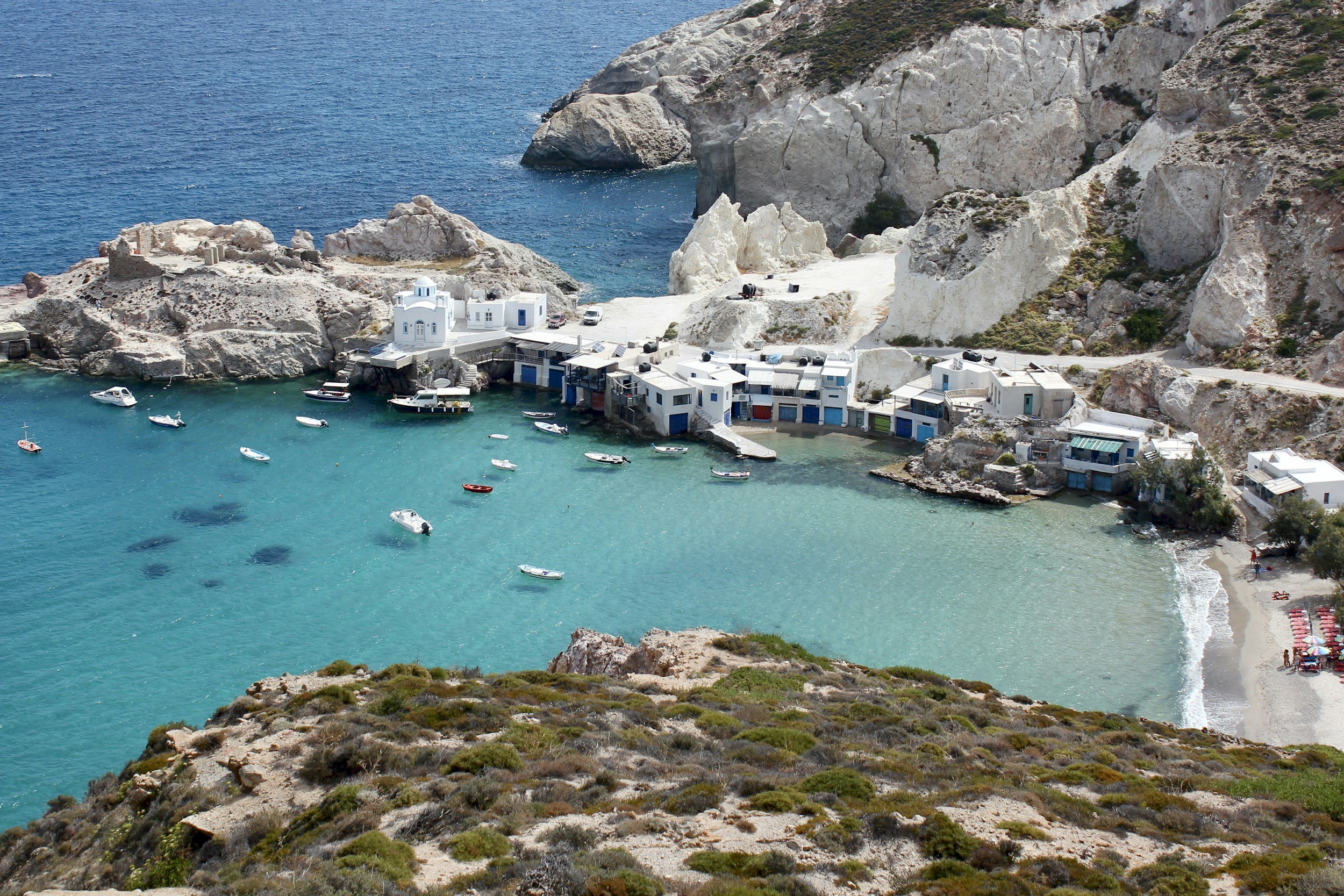
7) Milos
Milos island is a volcanic Greek island in the southwestern Cyclades group of the Aegean Sea, just north of the Sea of Crete. It's one of the more underrated Cyclades islands, being less crowded than Santorini or Mykonos but still packed with unique volcanic landscapes, colorful beaches, and a laid-back vibe. The island itself has a pretty distinctive horseshoe shape which was shaped by eruptions millions of years ago, and the exotic feel is often what draws in all the tourists.
Things to do:
The main hub of the island is called Plaka, and it lies right under the ruins of the Venetian Castle of Milos, a very interesting site. Whilst here, experience a nice sunset at Plaka Castle too. Moving on to the nature, you have to go to Sarakiniko Beach, it’s amazing and has such clear water. On the opposite coast is both Paralia Firiplaka and Tsigrado Beach, which are picturesque beaches and tucked away in the cliffs. The most popular activity is all the way on the south-western coast of the island, and it’s to take a boat trip around Kleftiko and the rest of the coast, stopping at beautiful caves, arch formations and crystal clear beaches.
How to get there:
Milos Airport (MLO) has flights which come in from Athens on a pretty regular basis.
You can, of course, take a classic ferry from other islands like Mykonos, Paros, Naxos, etc.
8) Corfu
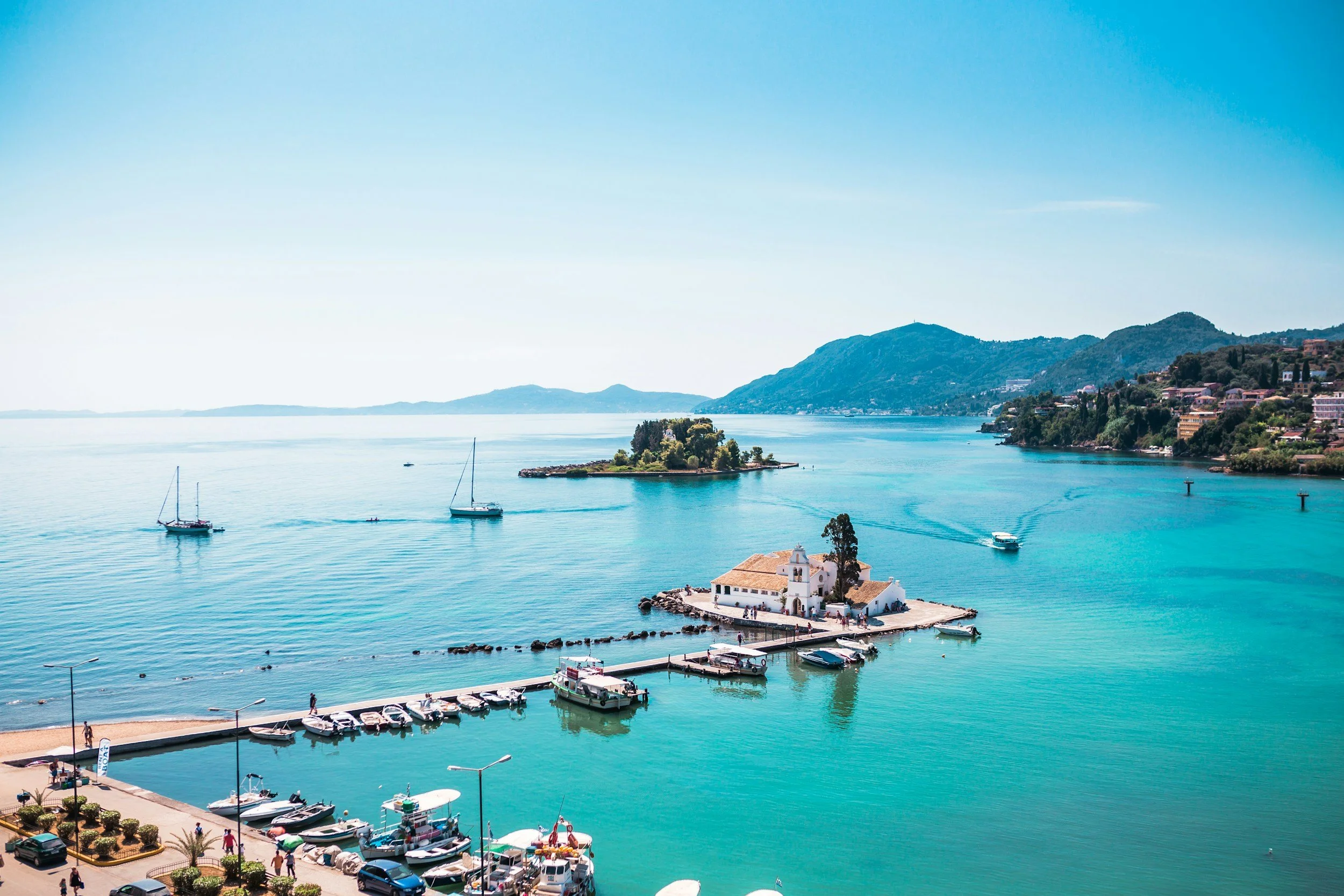
Corfu is one of the Ionian Islands in the Ionian Sea, off the northwestern coast of mainland Greece and very very close to Albania. Corfu has some amazingly stunning spots for photos, swimming and just literally looking it. It’s super accessible, and very lush and green thanks to the high amounts of rainfall it receives every year (mainly winter). It was settled by Corinthians around 734 BCE, and has gone through changing of ruling many times which can be seen in it’s elegant architecture. Compared to many of the islands in the Aegean Sea, Corfu has that more ‘European Vibe,’ and wouldn’t look out of place in Italy or Croatia.
Things to do:
Corfu Old Town itself is just so magical, so just walk through the Venetian style streets and check out Spianada Square, Greece’s largest square by far. Check out both Old Fortress on the rocky peninsula, and New Fortress which is perched up on the hilltop overlooking the city. Further south of this beautiful town is Achilleion Palace, Museum & Gardens - a famous palace complex with rich history. Paleokastritsa Beach is beautiful too, and on the cliffside you’ll find Paleokastritsa Monastery. The whole area is often called the jewel of the island, and it’s obvious why. Up on the north coast is Cape Drastis, the area with very picturesque dramatic cliffs over the turqoiuse water. I could go on forever about Corfu, but my final recommendation is to go and check out the Holy Monastery of Panagia Vlacherna. It’s a super photogenic monastery, and kind of an icon on the island.
How to get there:
Corfu International Airport (CFU) is right by the town and super accessible to fly from all over Europe in summer.
Ferry is also super easy, you can come from Greece (Igoumenitsa), Albania (Sarande) and even Italy (Bari, and more).
Support the Site
If these guides have helped your travels, consider buying me a coffee ~ it helps keeps the content free!
buymeacoffee.com/roamingideas