The Best Places to Visit in Germany
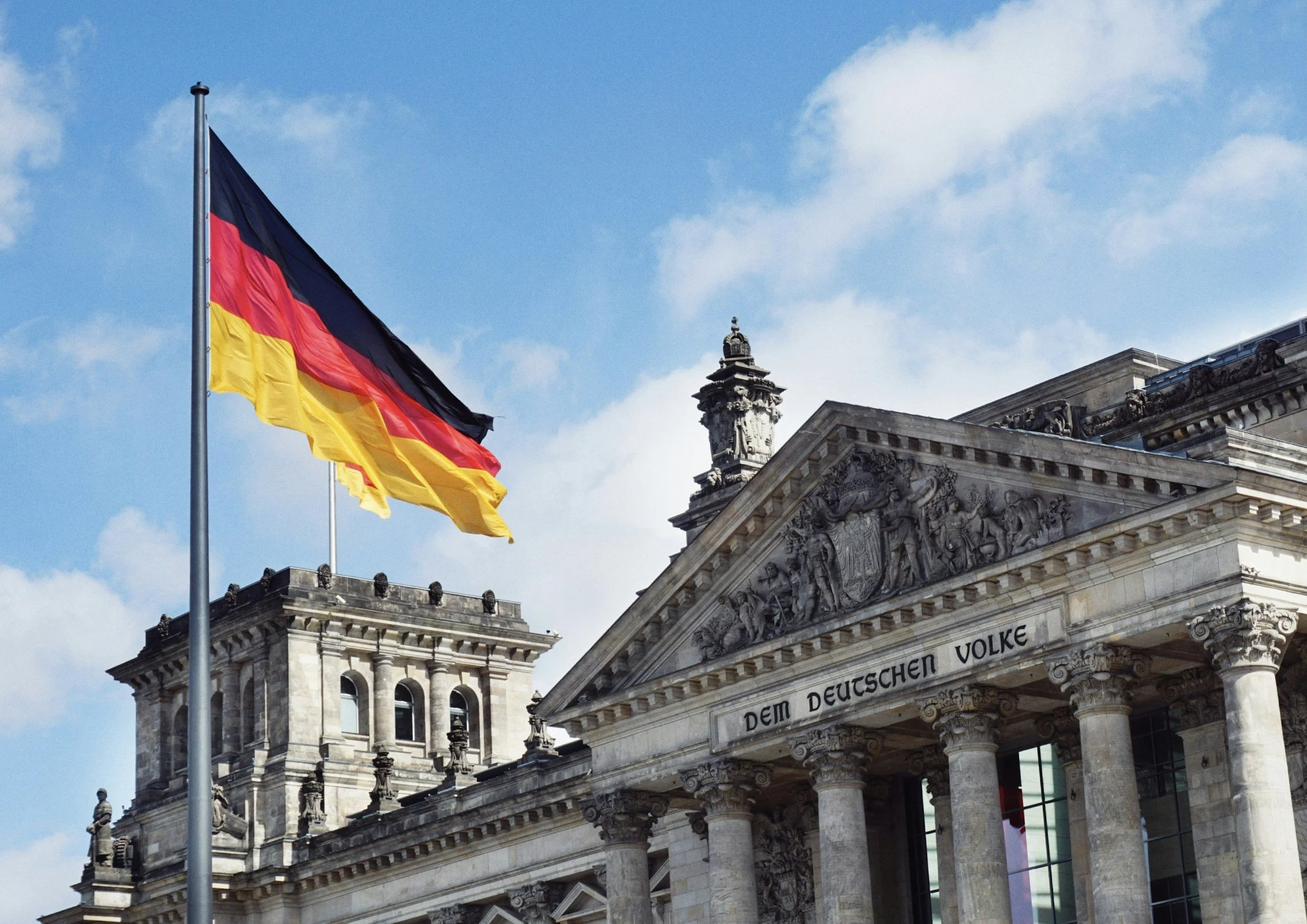
Germany is one of Europe’s most economically and culturally powerful countries in Europe, filled with influential cities and diverse landscapes around the country. It is the most populous country in the European Union, and the second largest country in terms of size. Germany has a complex history, as most know, but today Germany is one of the world's safest, most livable, and progressive countries, with excellent public transport, and universal healthcare. You wont run out of things to do in Germany, the country is massive and has endless charming historic towns as well as natural points of interest in regions like Bavaria. Beer culture is big in Germany, as is regional food all around the country.
Capital: Berlin
Currency: Euro
Language: German
When to visit: May to December
1) Munich
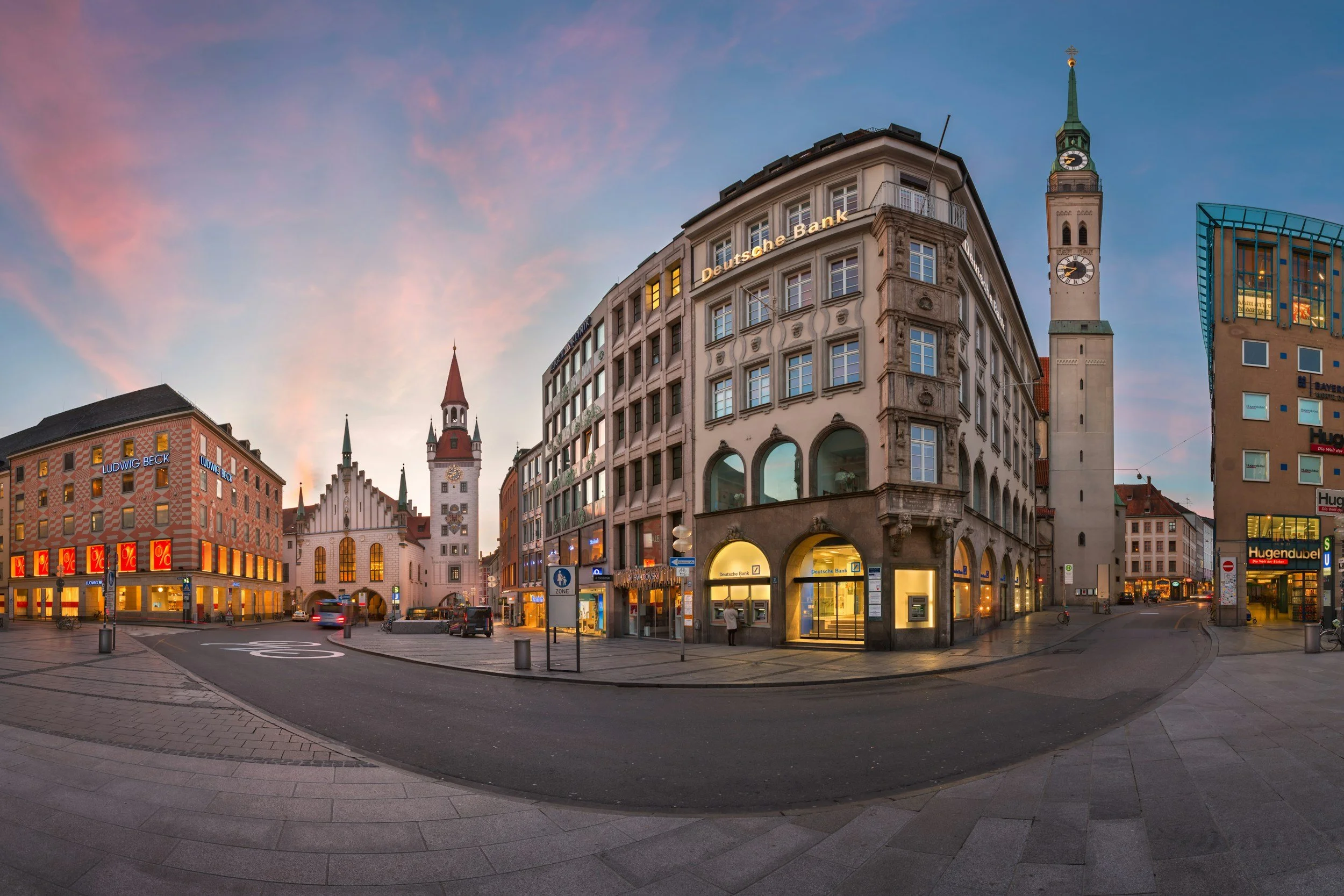
Munich is the largest city of the beautiful German state of Bavaria, with around 3 million people living in the cities metropolitan area. The city was founded in 1158, and today is famous for its traditions, such as Oktoberfest, beer and classical music. To describe the city, it feels very German in itself, with the streets around the city center being very walkable and grand. The city has a much more relaxed vibe in general when you compare it to a city like Berlin, despite its size. However, due to it being a popular destination as well as a gateway to the mountain regions of Bavaria, it can get busy with visitors.
Things to do:
The heart of Munich is Marienplatz, where you can see the Neues-Rathaus, the impressive town hall of Munich. You can also spot Frauenkirche, a restored gothic church inside Marienplatz as well. The last thing inside the heart of Munich I recommend is Hofbräuhaus, the most famous beer hall in the world. Right behind Marienplatz is Viktualienmarkt, the historic open-air food market. Munich Residence is one of the largest city palaces in Germany, and is the former royal palace of the Wittelsbachs. And if you like palaces, Nymphenburg Palace is a big grand baroque palace you can also visit. Many are familiar with New York’s central park, however Englischer Garten is actually bigger than Central Park, and one of the largest urban parks in the world. Lastly, you could visit the BMW Welt & Museum, The futuristic BMW headquarters complex which also features historic cars.
How to get there:
Munich Airport (MUC) has direct flights to and from all around Europe, as well as various long-haul options.
Munich has direct trains coming in from countless major cities, for example Berlin, Frankfurt, Cologne, Zurich, Vienna, etc.
Alternatively, you can take a FlixBus which is cheaper.
2) Neuschwanstein Castle
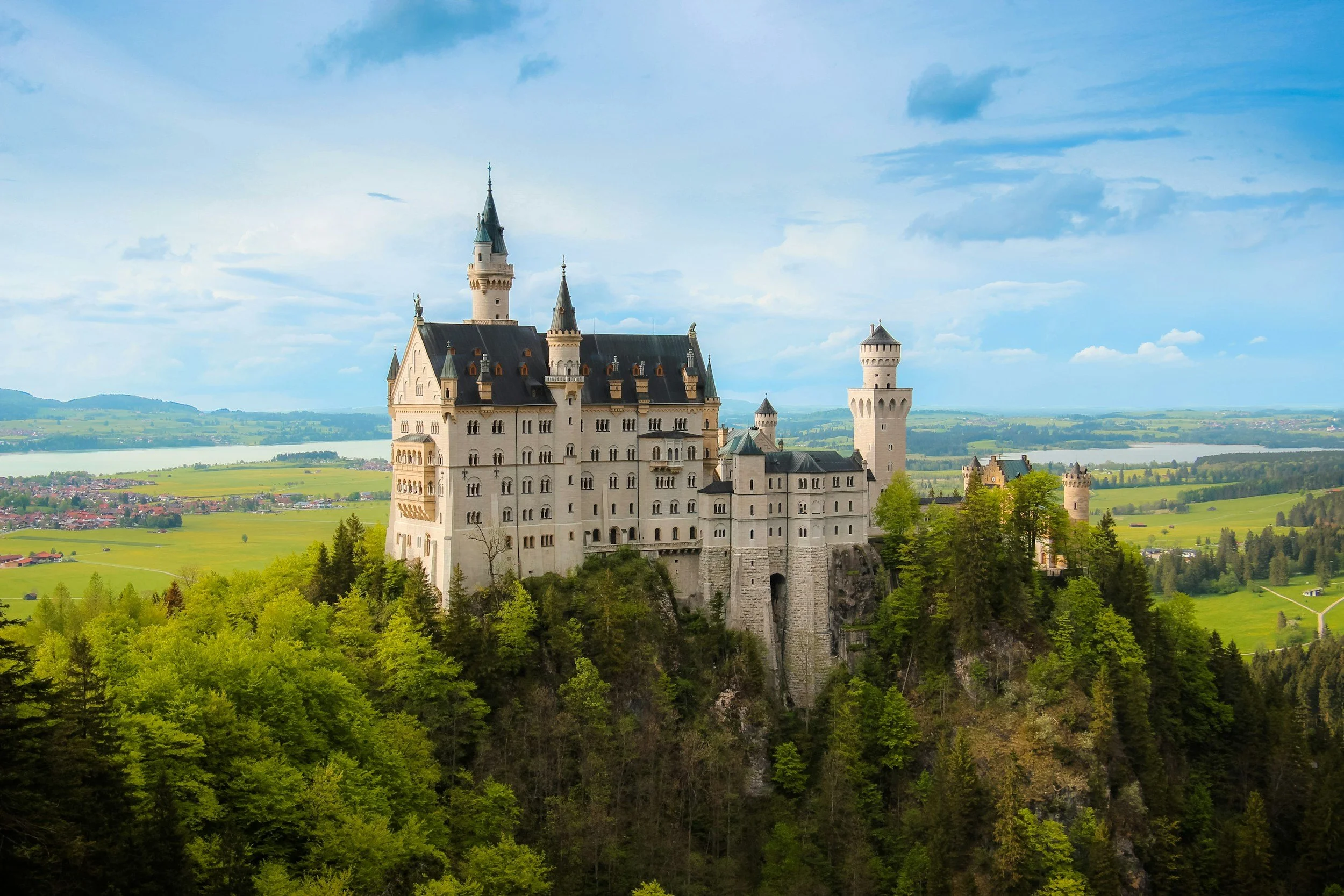
Neuschwanstein Castle is one of the world's most famous and instantly recognizable castles. It is a 19th-century Romanesque Revival palace perched on a hill, sitting at 965 meters elevation. It is an incredible sight to see with your own eyes, and it overlooks the Alpsee lake, as well as areas of mountains and forests.
Where is it:
The castle is located in southwestern Bavaria, close to the border of Austria. It sits by the towns of Füssen and Schwangau.
How to get there:
You can get the train from Munich to Füssen, and then take Bus 73 or 78 to Hohenschwangau (Neuschwanstein ticket center).
3) Berlin
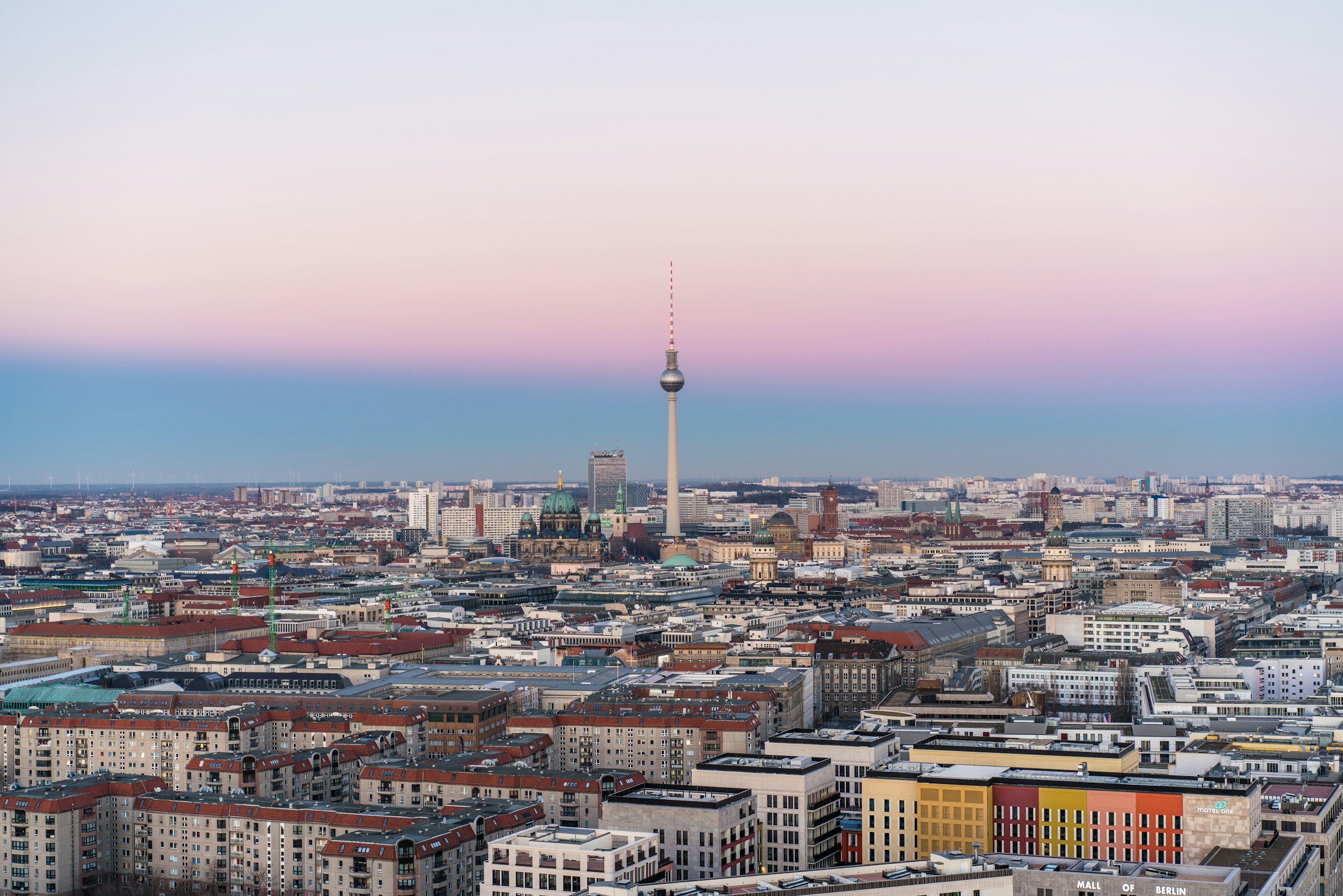
Berlin is Germany’s capital and largest city, sitting in the northeastern part of the country. The metro area of Berlin has a whopping 6 million people living there, and it is actually the most populous capital city in the entire EU. After WWII Berlin was divided into East and West, with the Berlin Wall cutting it in half from 1961 to 1989. Reunification in 1990 turned it into a giant construction site, and it's still rebuilding and reinventing itself today. In Berlin you’ll see a big range of architecture, from brutalist to modern to historic. It’s a very diverse city with many different communities and a big student population.
Things to do:
Berlin’s main attraction is the Brandenburg Gate, which served as the symbol for division when the Berlin Wall was up. It now resembles reunification. After you see that, walk through and head to the Reichstag, a historic German government building. You can also go up the buildings dome and get nice views of the city. Next you should head over to the Berlin Wall & East Side Gallery, where the longest remaining stretch of the Berlin Wall is. The center of the city is Mitte, the area where Berlin’s 365 meter TV Tower is, and is also a short walk from Berlin Cathedral, so you should check out this area for sure. Lastly, more for history enthusiasts; check out the Memorial for Murdered Jews by the Brandenburg Gate, as well as Checkpoint Charlie and any of Berlin’s world class museums.
How to get there:
Berlin Brandenburg Airport (BER) has flights come in from all around Europe, North America, Asia and Africa.
Direct trains to Berlin come from everywhere around Germany, as well as major cities in Austria, Poland, Czechia, etc.
FlixBus has cheaper options and is also connected everywhere.
4) Cologne
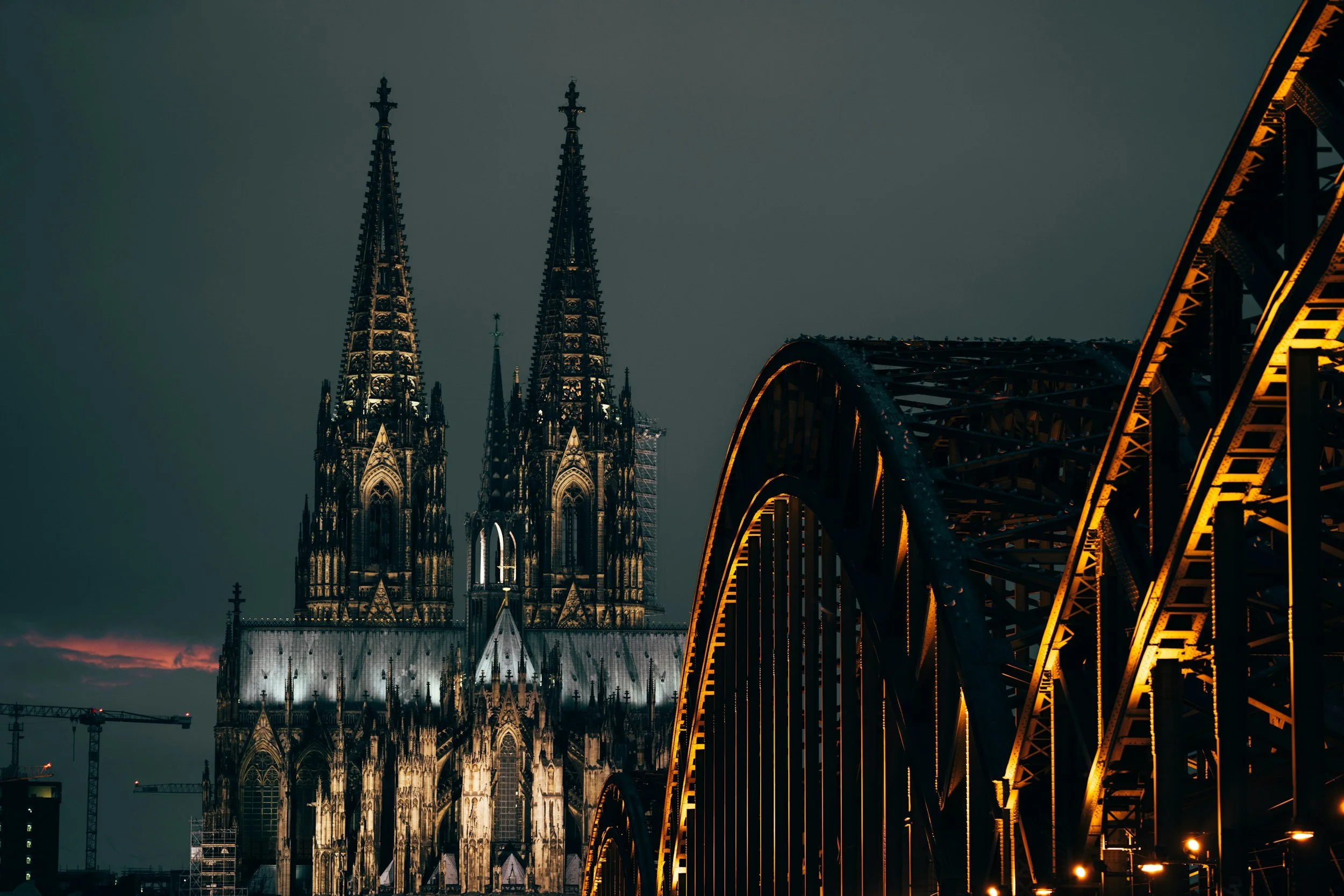
Cologne (Köln in German) is Germany's fourth-largest city and one of its oldest, sitting right on the Rhine River in the west of the country. Cologne is one of Western Germany’s most important and famous cities, instantly recognizable from the photos due to the Cathedral dominating the skyline. It’s a lively, beautiful city which is extremely livable and easy to walk around in, making it a great city to visit and enjoy.
Things to do:
As mentioned, you’ll obviously find yourself in the city center standing in front of Cologne Cathedral (Kölner Dom). It is one of the most impressive cathedrals in all of Europe famous for its gothic style and sheer size. You can climb to the top and get views of the city. After that, you can wak around the Old Town, which was rebuilt after WWII. East of the cathedral is Hohenzollern Bridge, an iconic bridge across the river known for the thousands of ‘love locks’ padlocked up to it. When you want to do some more walking, there is a massive promenade along the Rhine river which offers amazing views of the city by the water. Lastly, you can take the Cologne Cable Car, which runs from the Zoo to the Rheinpark and back.
How to get there:
Cologne Bonn Airport (CGN) is the cities airport, and you can fly from around Europe into here (usually budget airlines).
Otherwise, you can train from any major German city to Cologne.
FlixBus has cheaper, yet slower alternatives and is easy to use.
5) Dresden
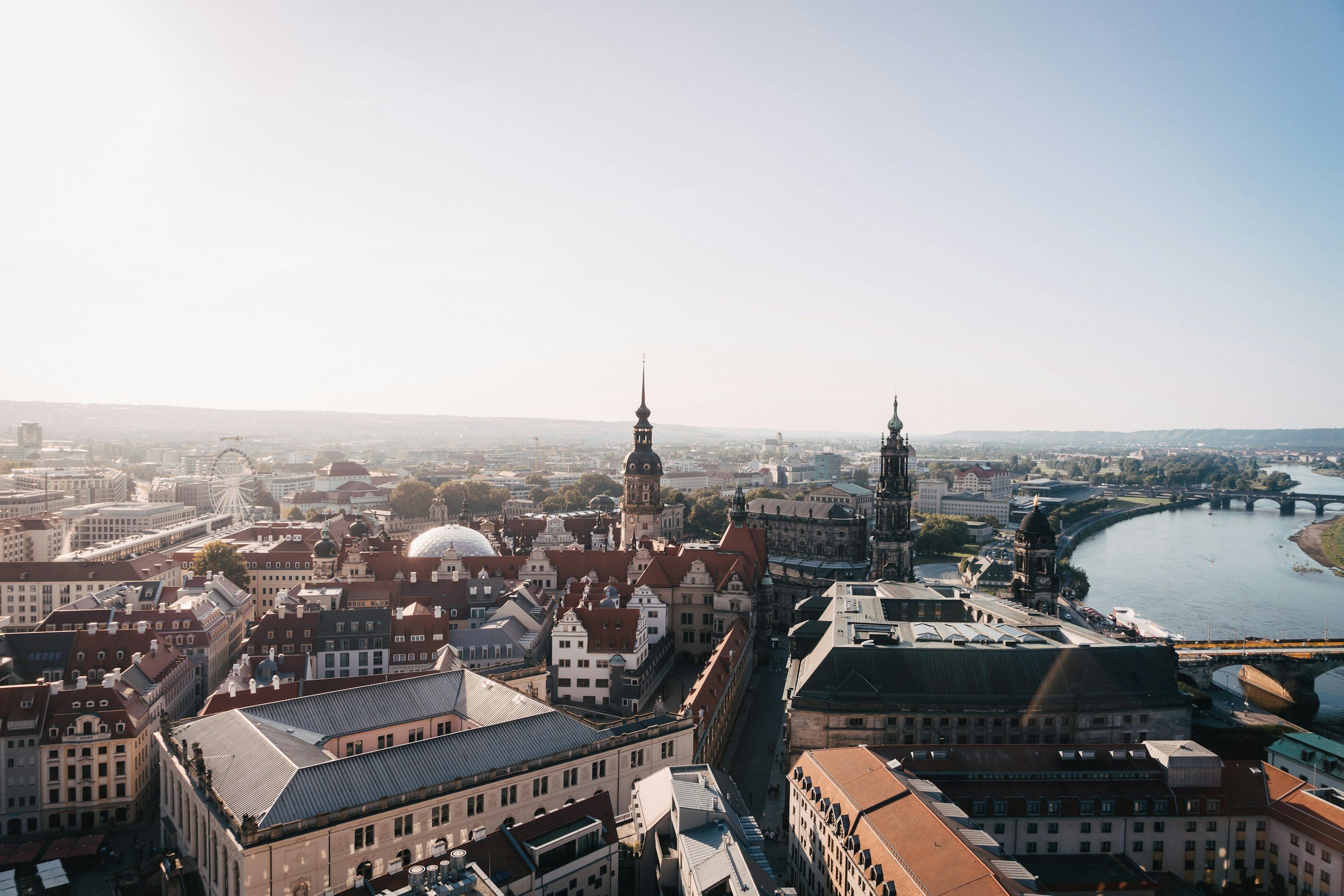
Dresden is the capital of Saxony in eastern Germany, and has a population of around 560,000 in the city area. The city is known for its brilliant architecture and east German charm. There is a lot of culture in Dresden, and it can be felt in the historic city center where baroque style buildings surround you. The city was almost completely destroyed by Allied bombing in February 1945, but has since rebuilt and is now a striking city.
Things to do:
Inside the ‘Old Town’ of Dresden (which is not actually old as it has been rebuilt), you can find many great architectural sites, such as Frauenkirche, Zwinger Palace, Residenzschloss and Semperoper Dresden to name a few. Walking round you’ll see baroque architecture on every street. Walk along the river, passing through Brühl Terrace for great views. You can also cross the river to Neustadt where you can find different types of buildings, street art and a different vibe in general.
How to get there:
The best way to get to Dresden is to take a direct train from any big city nearby (Munich, Leipzig, Prague, and other cities in Germany).
FlixBus often offers the same routes for cheaper.
6) Saxon Switzerland National Park
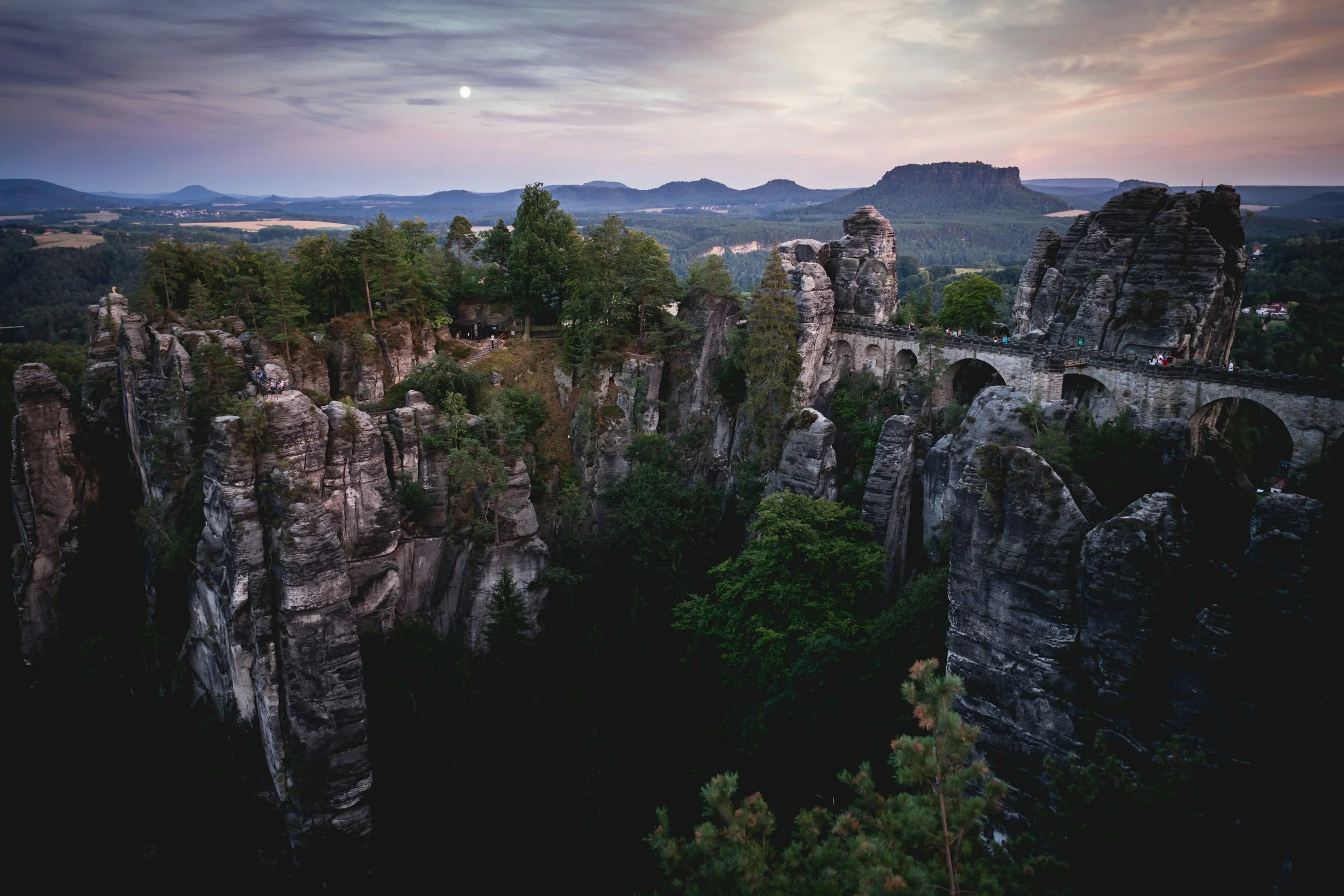
Close to Dresden (no, it’s not in Switzerland) is Saxon Switzerland National Park, a beautiful protected area in southeastern Germany close to the Czech border. The park is notoriously famous for its dramatic sandstone rock formations, deep gorges, table mountains, and dense forests. There is some bizarre rock towers which you’ll see as you explore the area, and is a popular spot for hikes and photos.
Things to do:
There are a few well-known hikes to do in the park, such as the hike to the Bastei Bridge, the parks most iconic viewpoint (Start from the town of Rathen). Another hike is the Königstein Fortress Loop, which is a bit longer but very cool. If you don’t want to hike, you could take an Elbe River Boat Cruise, or just check out the towns near the area like Bad Schandau, the best base for the park.
How to get there:
From Dresden, take any of the frequent trains to Bad Schandau or Königstein, the gateway towns.
7) Leipzig
Leipzig is a large, vibrant city in eastern Germany, close to Berlin and Dresden. Leipzig is set apart from these cities in the sense that is a super big university city, filled with students which gives it an energetic vibe amongst the historic architecture. Much like Dresden, Leipzig was heavily bombed in WWII and then rebuilt under East German rule with a lot of socialist-era concrete, so the city has a very mixed look. You’ll find lots of young people here due to its affordability and just overall vibe.
Things to do:
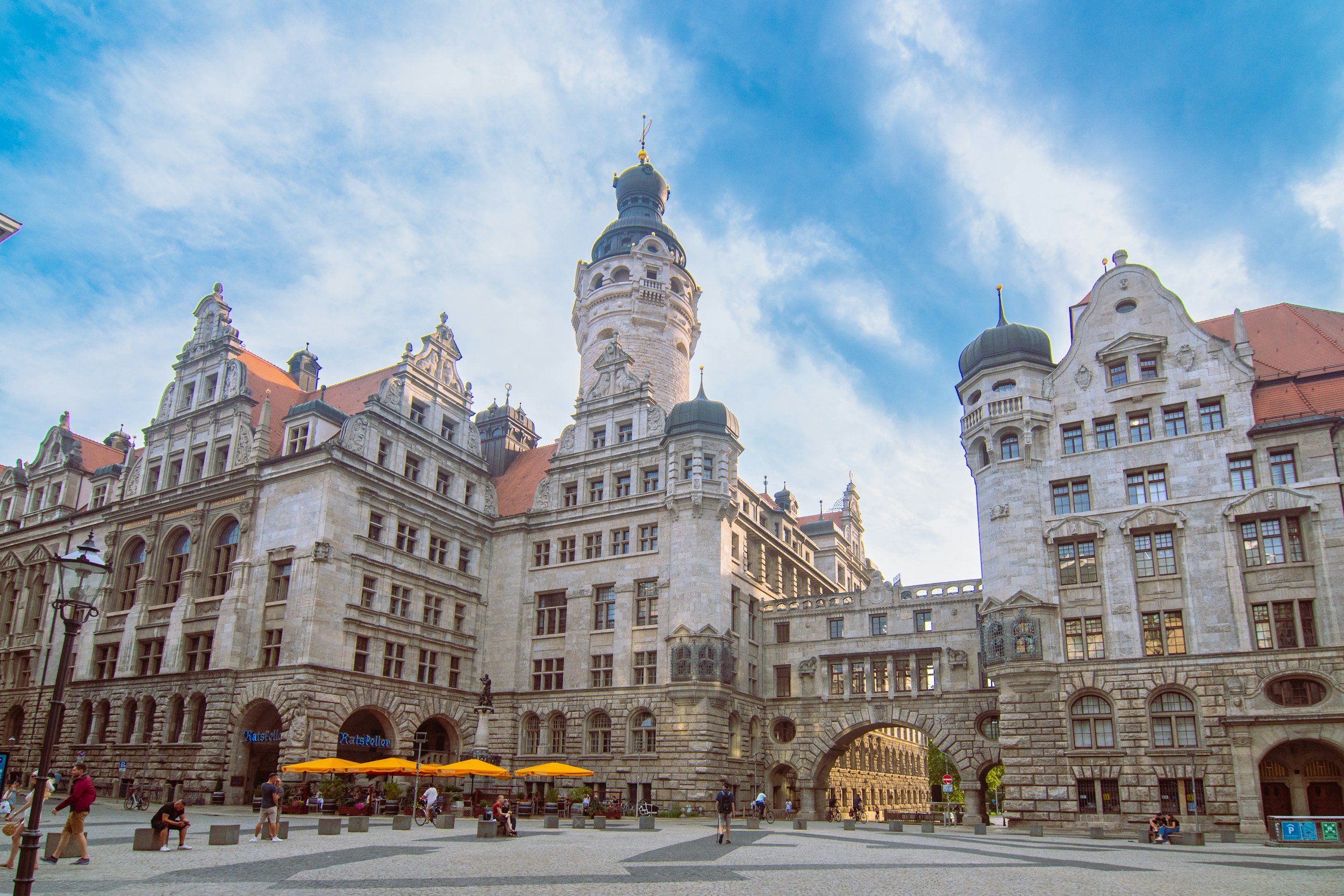
Head straight to the central square in the city (Markt), which boasts the impressive Renaissance Old Town Hall inside (seconds as museum), as well as other historic buildings such as Thomaskirche and Nikolaikirche, both beautiful churches. It is all a very walkable area you can enjoy on foot, and Augustusplatz is also a great place just round the corner. The New Town Hall is also close to all of this, and has an elaborate, grand design. Lastly, a bit further away is Monument to the Battle of the Nations. It is a massive monument serving as a memorial to the soldiers of the Battle of Leipzig in 1813. Leipzig is in general just a great city to explore on foot.
How to get there:
Simply train direct from any nearby big city like Dresden, Munich, Berlin, basically anywhere in this whole region of Germany.
FlixBus also offers endless routes from all around Germany and surrounding countries.
8) Rothenburg ob der Tauber
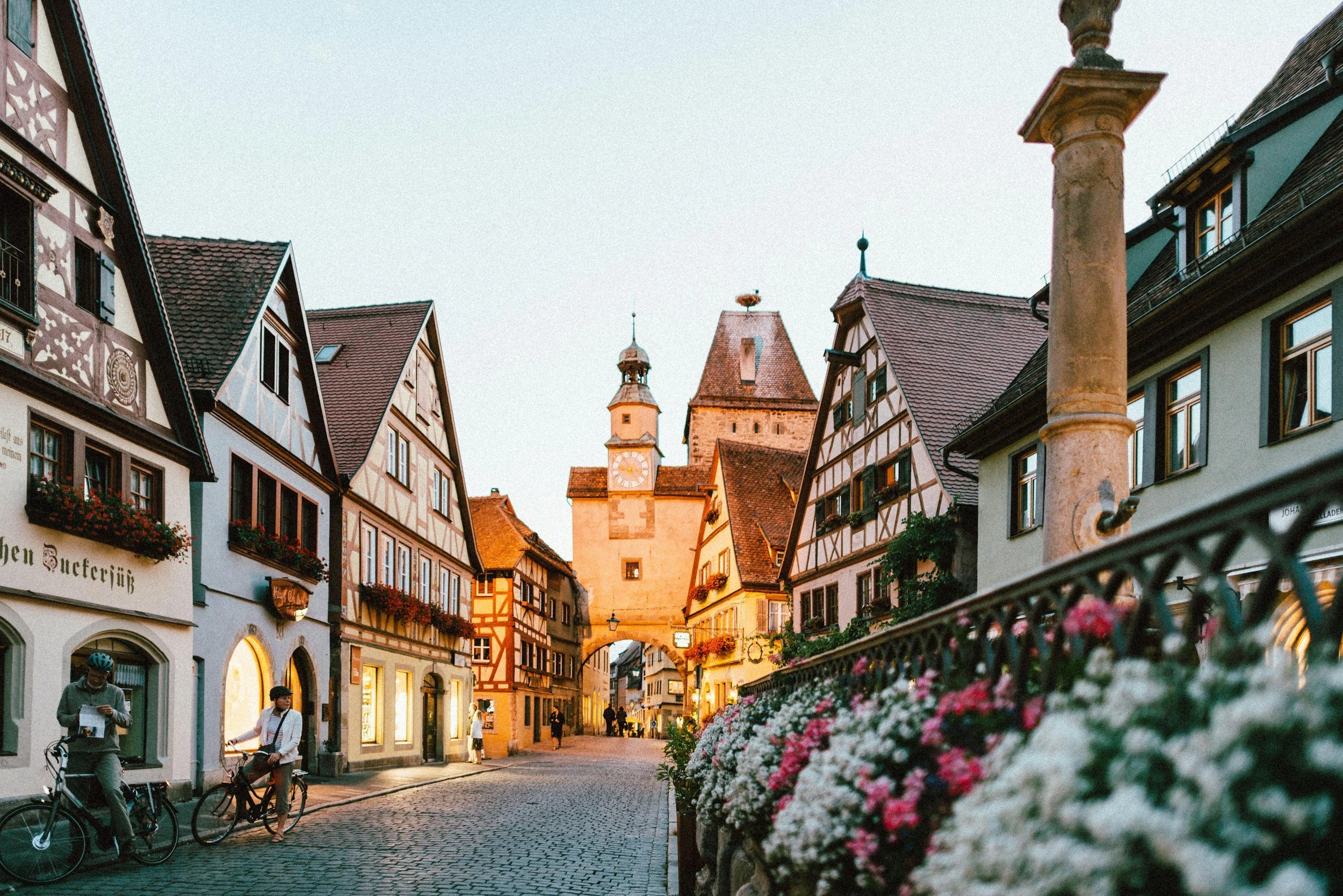
Rothenburg ob der Tauber is a perfectly preserved medieval town in northern Bavaria, Germany, widely regarded as one of the best examples of a walled, historic German town that still looks almost exactly like it did in the 16th century. It’s a picturesque, fairytale like location which attracts tourists from all around the continent. Only about 11,000 people live here and it’s regarded as the best medieval town in Germany.
Things to do:
In the Old Town, walk the medieval walls with towers and gates and see the town from above. The postcard corner is called Plönlein, so get your photos there. You can also visit and climb the Town Hall Tower in Marktplatz. This area lights up at Christmas time too. It is the perfect town to just walk around and admire.
How to get there:
Take the train from a big city like Munich or Frankfurt to Steinach, then take a regional train into the towns station.
9) Heidelberg
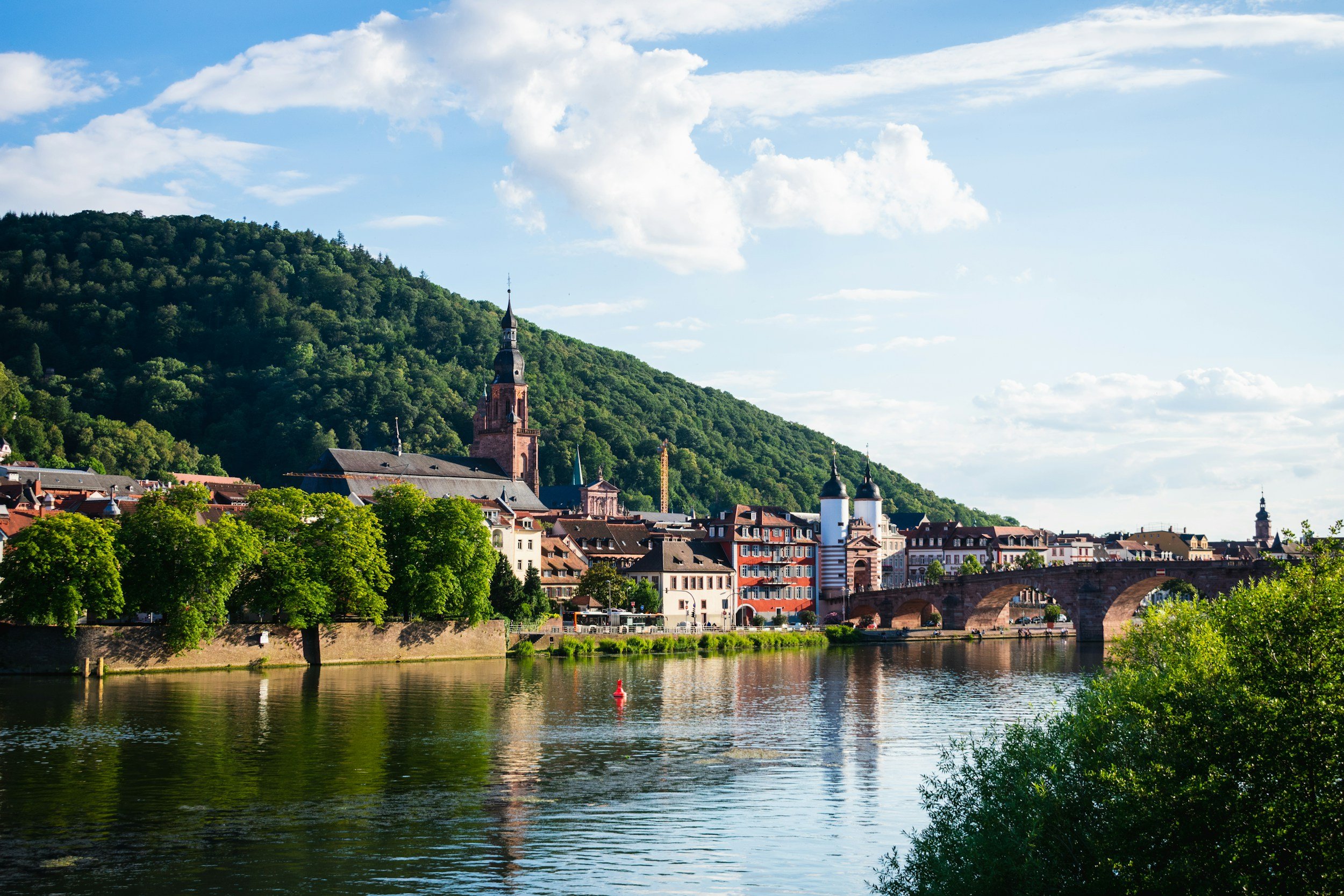
Heidelberg is a historic university town in southwestern Germany, famous for its well preserved old town and romantic atmosphere. The vibe of Heidelberg is a lot more relaxed than some of the other big cities, with the population only being 160,000. The whole city is charming, and offers a good bit for tourists, especially those who like walking through pretty areas and exploring underrated destinations.
Things to do:
Overlooking the beautiful Old Town of Heidelberg is the Heidelberg Castle, a dramatic ruin castle up on the hill. Inside the cellars of the castle you can actually see the world’s largest wine barrel, interestingly. You should just spent time walking through the old town streets, and crossing over the Old Bridge with the monkey statue. Despite the many things you can see in the Old Town, you can also take a short day trip to Schwetzingen Palace Gardens, which are beautiful and about 15km away.
How to get there:
You can get a direct train from big cities around Heidelberg, like Frankfurt, Munich, Stuttgart, etc.
Otherwise, FlixBus has many options you can check as well.
10) Hamburg
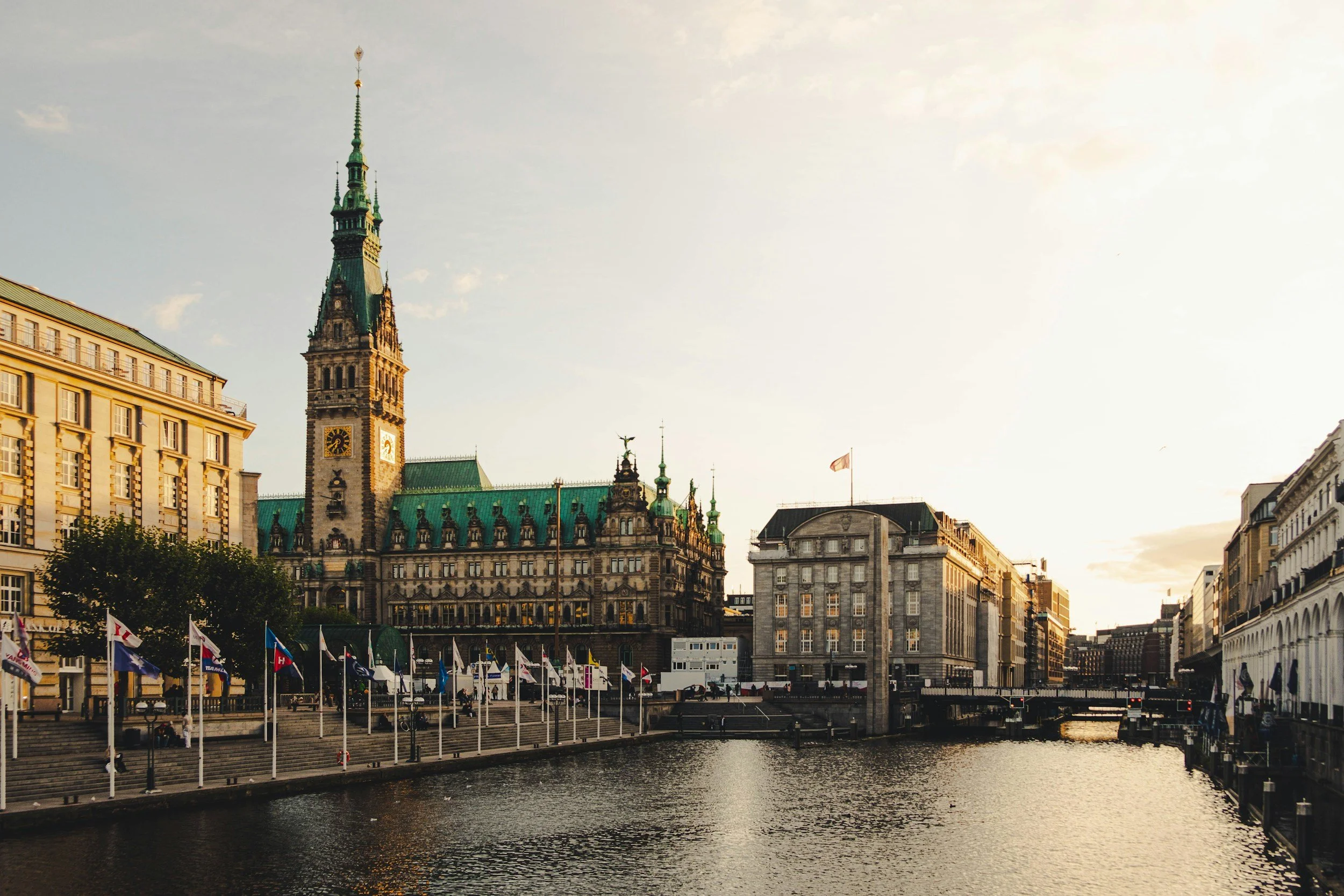
Hamburg is Germany's second-largest city and its biggest port, located in the north of the country on the Elbe River estuary, about 100 km from the North Sea. It's a major maritime and trade hub with a population of around 1.85 million in the city area. The city used to be a free city-state, and was independent for a long time. The city was heavily bombed in WWII, but was rebuilt with a mix of restored brick Gothic and modern glass and steel. The port is one of Europe's largest and busiest. A lot of canals run through the city, and it actually has more bridges than Venice. Overall, it’s a very cool city.
Things to do:
Step into the historic city center area, where you can see the neo-Renaissance style City Hall, St. Michaels Church, and the UNESCO listed beautiful Speicherstadt (Warehouse District), where you can get a feel of the city’s maritime history. Spielbudenplatz is the large square of Hamburg, which is always lively with something going on. Another landmark of Hamburg by the Old Town is Elbphilharmonie, an iconic piece of architecture where you can catch a live performance inside. Lastly, Miniatur Wunderland is known to be the museum with the largest model railway system in the world.
How to get there:
Hamburg Airport (HAM) is a convenient gateway when coming in from around Europe.
Otherwise, take a train direct from almost every major city in Germany and surrounding countries. (Berlin, Cologne, Frankfurt, Munich, Amsterdam, Copenhagen, etc).
FlixBus offers the same routes for cheaper as well.